
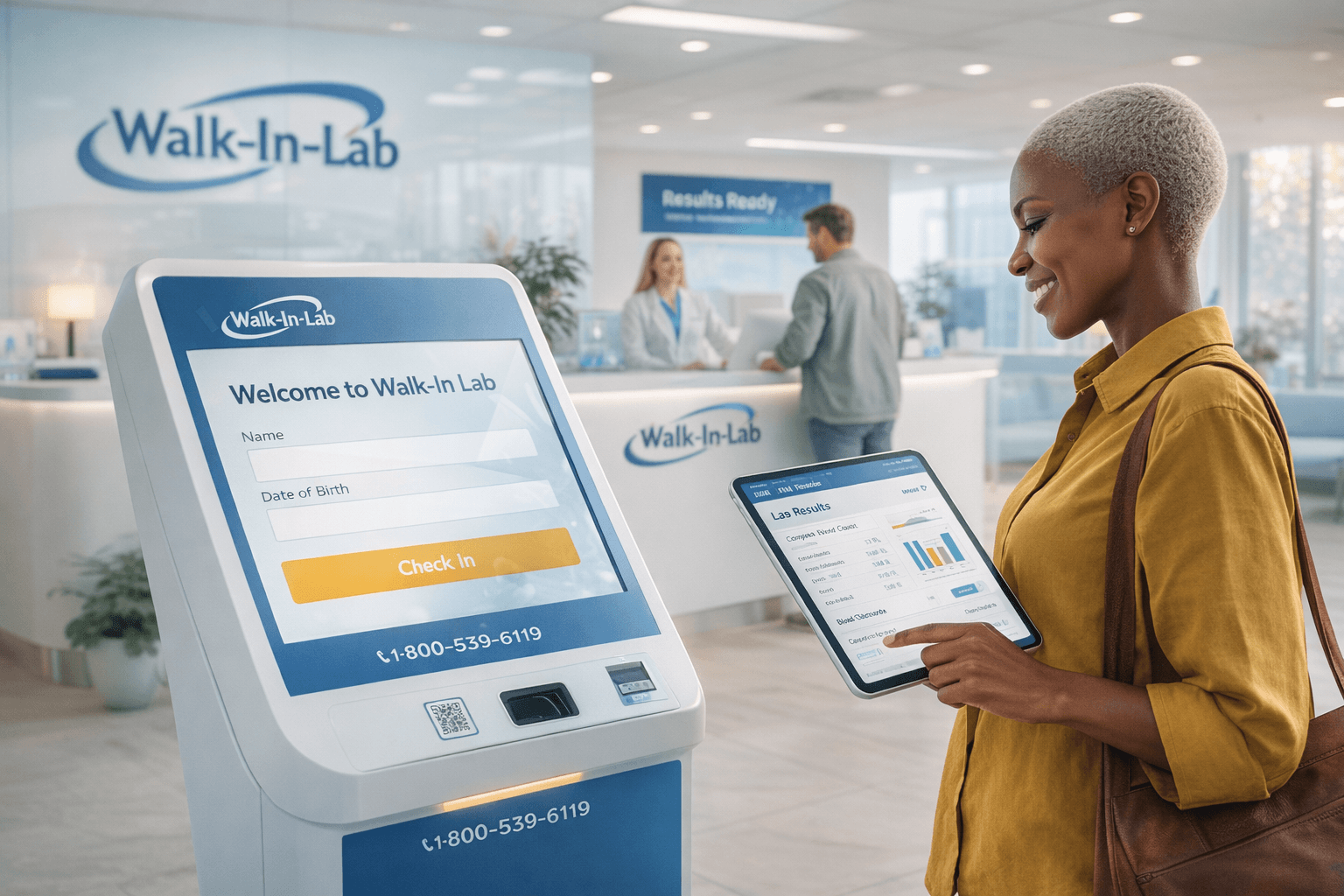
If you’ve ever needed blood work but didn’t want to deal with doctor appointments, insurance approvals, or long wait times, Walk-In Lab offers a simpler alternative. It’s a direct-to-consumer lab testing service that lets you order tests online, visit a nearby lab, and get results quickly — often at a lower cost.
But is it actually worth using in 2026?
In this guide, you’ll learn exactly how Walk-In Lab works, what it costs, which tests are worth buying, and when you’re better off going through a doctor instead.
What Is a Walk-In Lab?
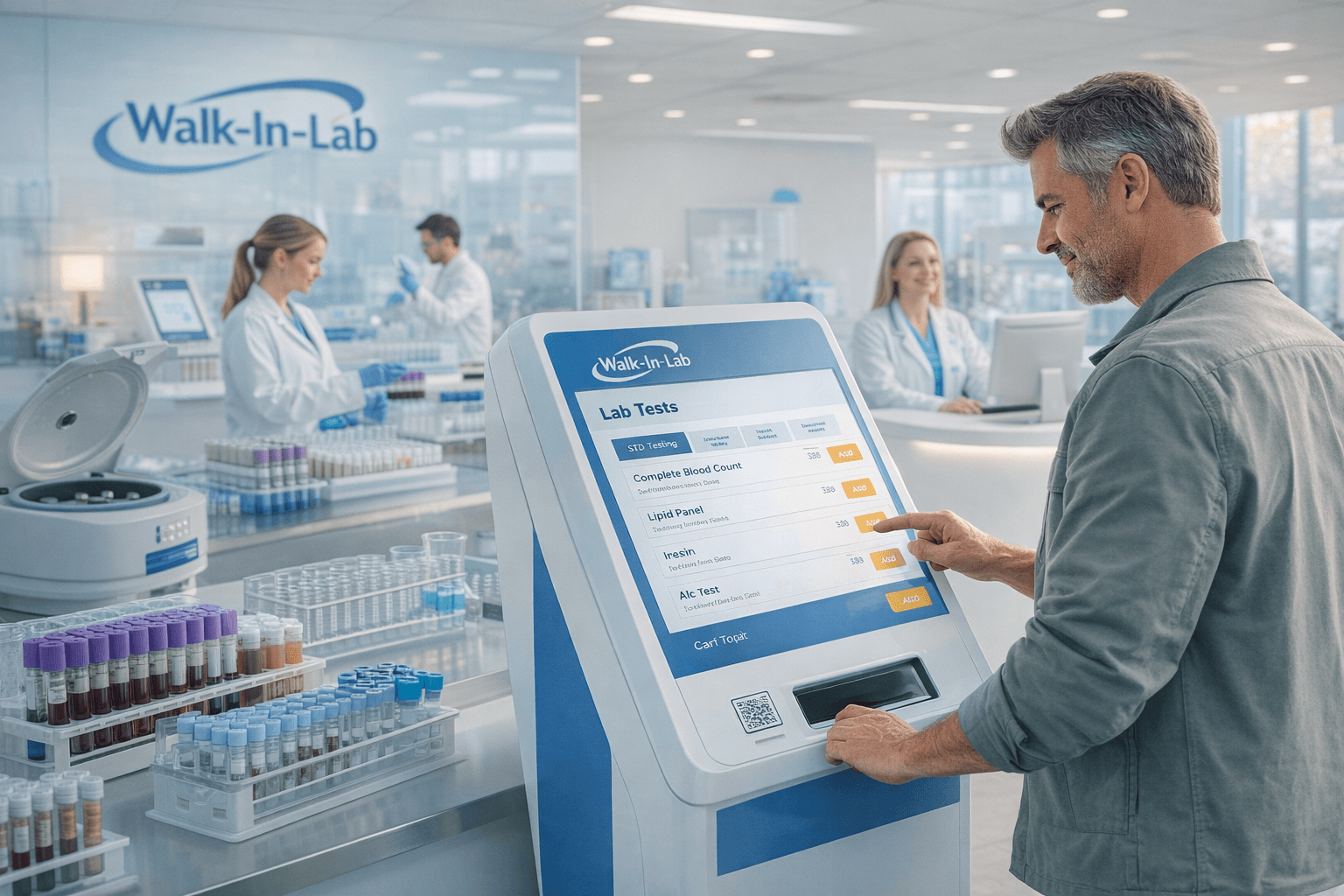
A “walk-in lab” refers to a direct lab testing service where you can order medical tests without a doctor’s visit. Instead of getting a referral, you choose your test online, pay upfront, and then go to a partner lab for sample collection.
Walk-In Lab (walkinlab.com) is one of the most established platforms in this space. It connects users with certified lab networks like Quest Diagnostics and Labcorp, allowing you to access a wide range of tests— from basic blood panels to specialized hormone and STD screenings.
Key takeaway:
You’re not skipping the lab — you’re skipping the doctor visit and ordering the test yourself.
How Walk-In Lab Works (Step-by-Step)
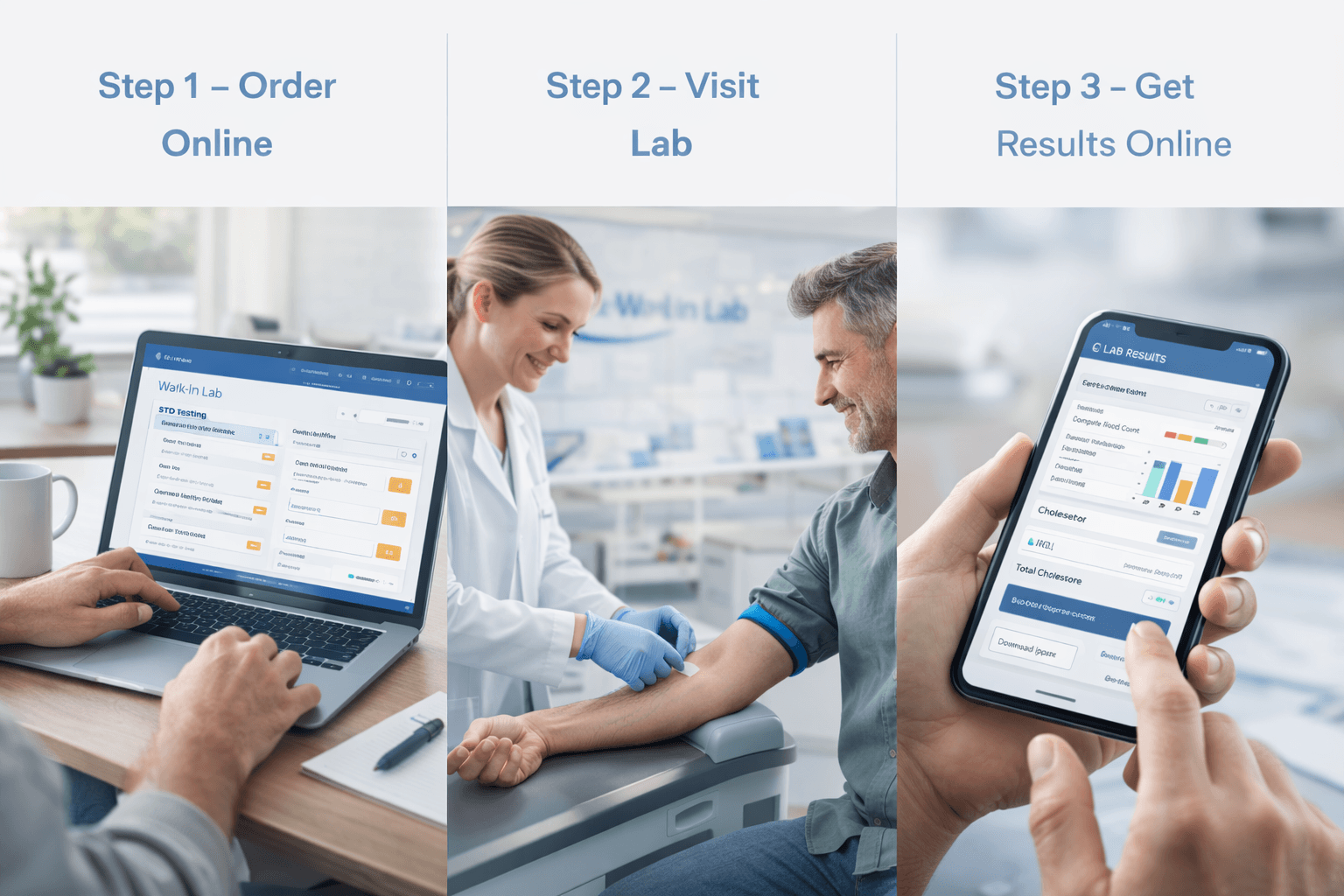
The process is straightforward and designed for speed and convenience.
Step 1 – Order Your Test Online
You browse tests on the Walk-In Lab website, select what you need, and pay upfront. No insurance is required.
Step 2 – Visit a Partner Lab Location
After ordering, you’ll receive instructions and can visit a nearby lab (usually Quest or Labcorp). Most locations accept walk-ins or short appointments.
Step 3 – Get Results Online
Results are typically delivered through your online account within:
- 24–72 hours for standard blood tests
- A few days for more complex panels
You can download or share results as needed.
Pricing Breakdown (Is Walk-In Lab Actually Cheap?)
Pricing is one of the main reasons people consider Walk-In Lab.
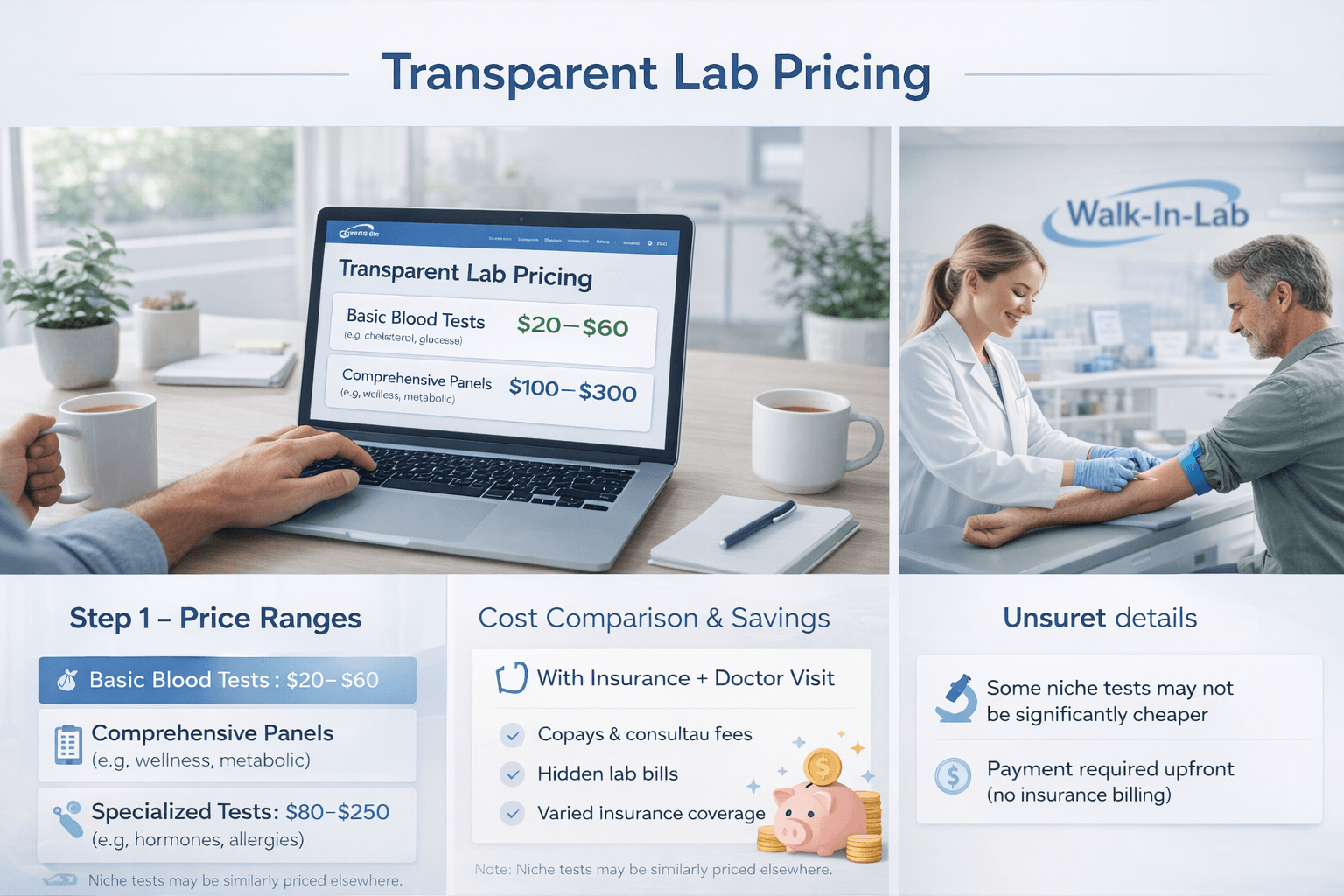
Typical Price Ranges:
- Basic blood tests: $20–$60
- Comprehensive panels: $100–$300
- Specialized tests (hormones, allergies, etc.): $80–$250
How It Compares:
- With insurance + doctor visit: Often more expensive when factoring in copays, consultations, and lab fees
- Without insurance: Walk-In Lab is usually significantly cheaper
Where You Save:
- No consultation fees
- Transparent upfront pricing
- Frequent discounts and bundled test panels
Where It Can Be Less Competitive:
- Some niche or specialized tests are priced similarly to competitors
- No insurance billing means you pay everything upfront
Bottom line:
Walk-In Lab is most cost-effective for routine testing and common panels, especially if you’re paying out of pocket.
Best Tests to Buy (And What to Skip)
Not every test offers the same value. Here’s where Walk-In Lab shines — and where it doesn’t.

Best Tests to Buy
- STD Testing Panels
- Fast, private, and often cheaper than clinics
- Ideal for routine screening
- Hormone Testing
- Testosterone, estrogen, thyroid panels
- Popular with biohackers and fitness-focused users
- General Health Panels
- Comprehensive metabolic panel (CMP)
- Lipid panel (cholesterol)
- Basic wellness screenings
These are high-volume, standardized tests — exactly where Walk-In Lab delivers the most value.
What to Skip (Or Be Careful With)
- Complex diagnostic testing
If you need interpretation or follow-up care, a doctor is better. - Rare or highly specialized tests
Pricing may not be significantly better than traditional routes. - Situations requiring medical guidance
Walk-In Lab provides results — not diagnosis or treatment.
Is Walk-In Lab Legit, Safe & Accurate?

Yes — Walk-In Lab is considered legitimate and safe.
Here’s why:
- Tests are processed through CLIA-certified laboratories
- Uses established networks like Quest and Labcorp
- Follows standard medical testing protocols
Accuracy is the same as traditional lab testing because the actual testing is done in certified labs — not by Walk-In Lab itself.
Important note:
The platform provides results, but not medical advice. You may need a doctor to interpret abnormal findings.
Who Should Use Walk-In Lab?

Walk-In Lab is best suited for:
1. People Without Insurance
If you’re paying out of pocket, this is often the most affordable route.
2. Health-Conscious Users
Those tracking biomarkers regularly (fitness, longevity, etc.).
3. People Who Want Speed
Avoid delays from scheduling doctor visits.
4. Privacy-Focused Users
Especially for STD testing or sensitive screenings.
When You Should NOT Use Walk-In Lab
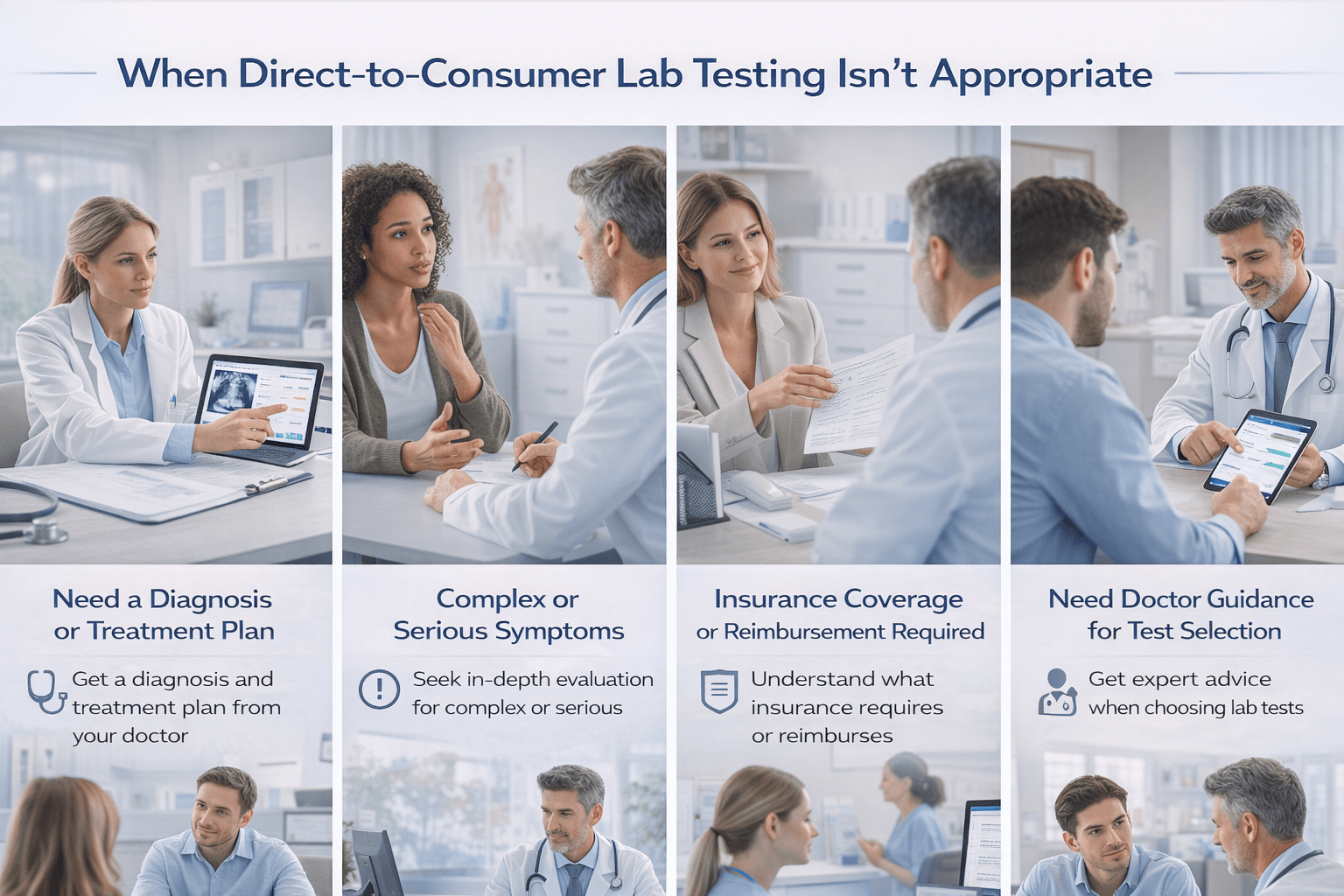
There are situations where it’s not the best option:
- You need a diagnosis or treatment plan
- You’re dealing with complex or serious symptoms
- You require insurance coverage or reimbursement
- You need a doctor to guide test selection
Final Verdict: Is Walk-In Lab Worth It in 2026?
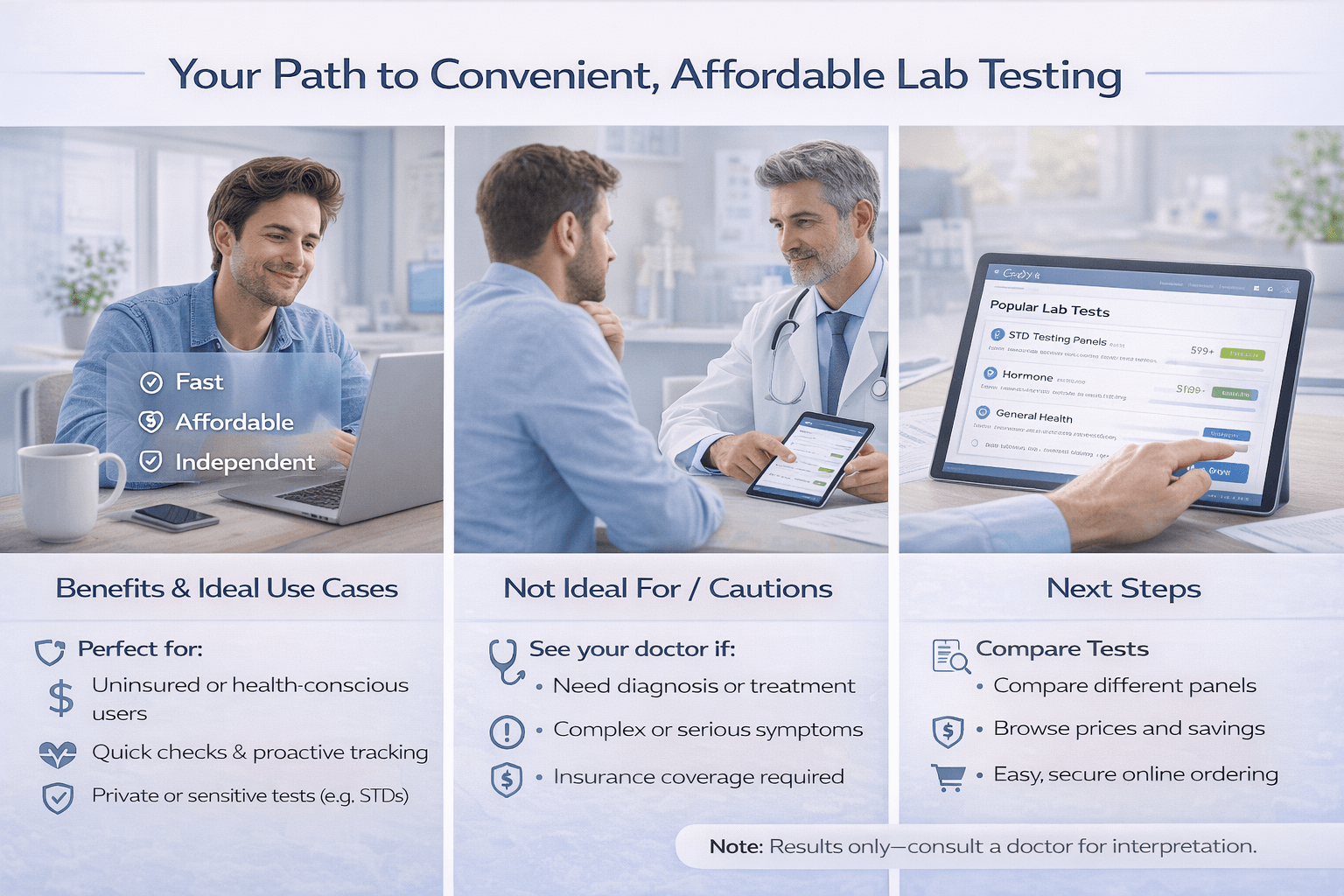
Walk-In Lab is a strong option if you want fast, affordable, and independent access to lab testing.
It’s worth it if:
- You’re paying out of pocket
- You need routine or standard tests
- You value speed and convenience
It’s not ideal if:
- You need medical guidance or diagnosis
- You’re dealing with complex health concerns
Overall:
For straightforward testing, Walk-In Lab delivers real value. It removes unnecessary steps, lowers costs, and gives you direct access to professional lab services.
Next Steps
If you’re considering using Walk-In Lab:
- Compare test pricing before ordering
- Choose high-value panels (STD, hormone, general health)
- Plan follow-up with a doctor if needed
You can explore available tests and pricing directly on their official website.