

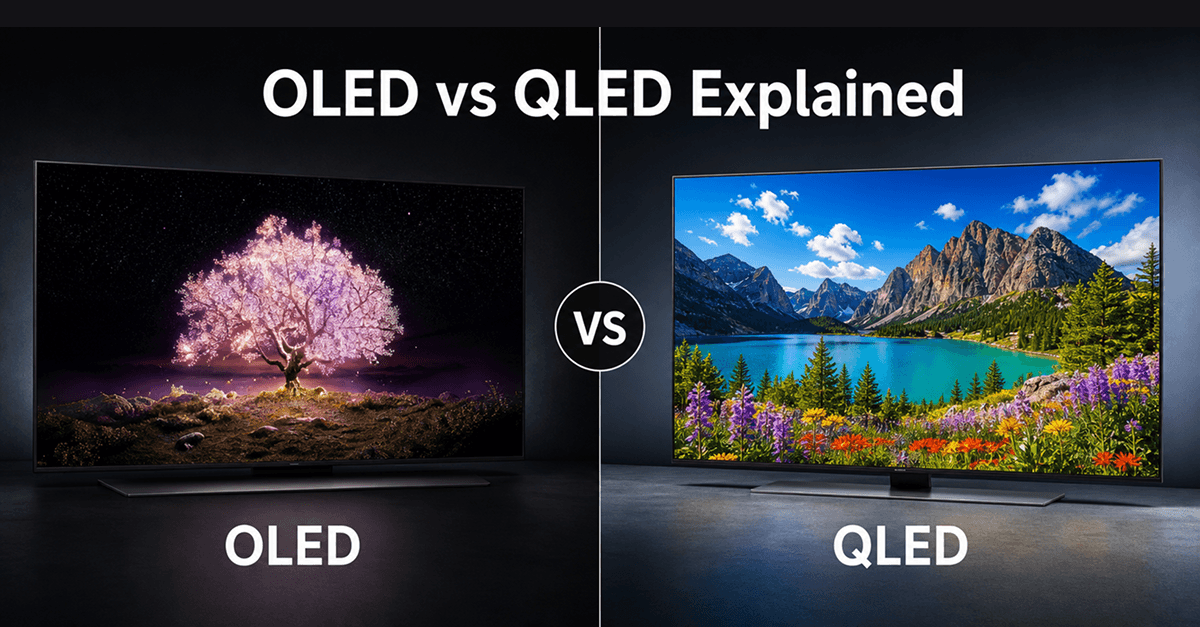
If you’re shopping for a new television, you’ve likely encountered the terms OLED and QLED. Both technologies are widely available in modern TVs and both can deliver impressive picture quality. However, they work differently and excel in different viewing situations.
Understanding the differences between OLED and QLED can help you make a more informed decision and avoid paying for features that may not matter to your viewing habits.
What Is OLED?
OLED stands for Organic Light Emitting Diode.
Unlike traditional display technologies, OLED panels use self-emitting pixels. Each individual pixel produces its own light and can be turned on or off independently.
This allows OLED televisions to display true blacks because completely inactive pixels emit no light at all.
The result is exceptional contrast, deep black levels, and highly detailed images, especially in dark scenes.
https://www.amazon.com/Best-Sellers-OLED-TVs/zgbs/electronics/6463520011
Advantages of OLED
- Perfect black levels
- Outstanding contrast
- Excellent viewing angles
- Fast response times
- Premium cinematic image quality
Disadvantages of OLED
- Generally more expensive
- Lower peak brightness compared to some QLED models
- Potential long-term burn-in risk under extreme usage conditions
What Is QLED?
QLED stands for Quantum Dot Light Emitting Diode.
Despite the name, QLED is not self-emissive like OLED. Instead, it uses an LED backlight combined with a layer of quantum dots that enhance brightness and color performance.
QLED TVs are known for producing vibrant images and high brightness levels, making them particularly effective in well-lit rooms.
Amazon Best Sellers: Best QLED TVs
Advantages of QLED
- High brightness output
- Excellent color performance
- Wide range of price options
- No significant burn-in concerns
- Strong performance in bright rooms
Disadvantages of QLED
- Black levels are generally not as deep as OLED
- Contrast performance depends on backlighting technology
- Viewing angles may be more limited
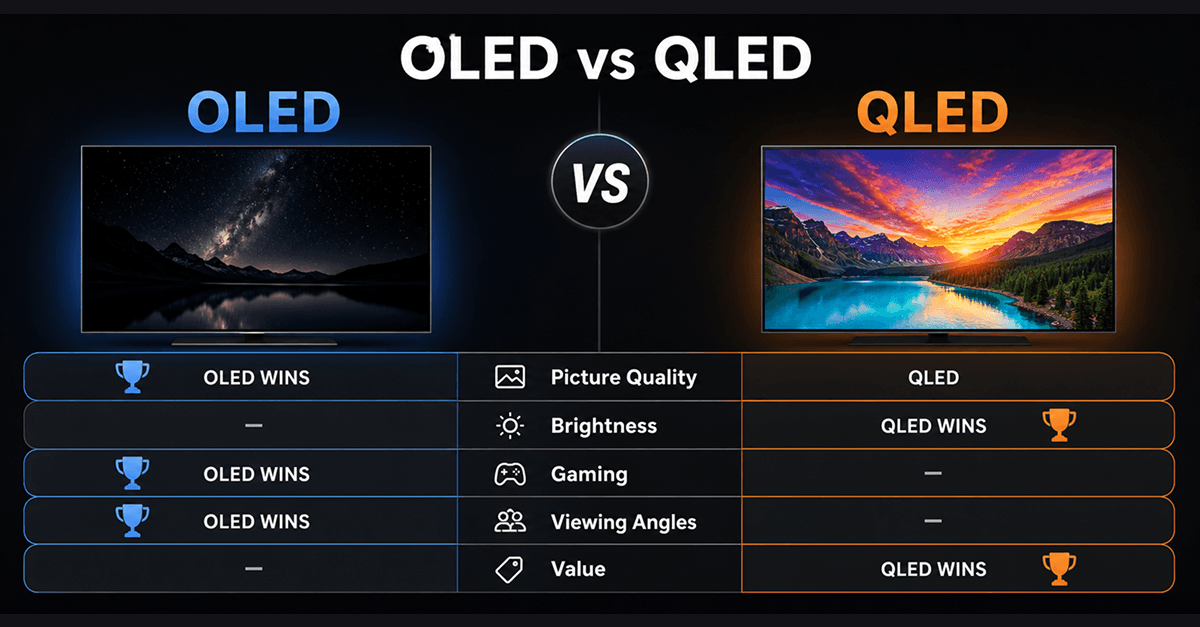
OLED vs QLED: Picture Quality
Picture quality is often the most important consideration when choosing a television.
OLED typically delivers superior contrast because each pixel can turn completely off. This creates a greater sense of depth and realism, particularly in movies and television shows with darker scenes.
QLED produces excellent image quality as well, but relies on backlighting. Even advanced local dimming systems generally cannot match OLED’s pixel-level control.
Winner: OLED
OLED vs QLED: Brightness
Brightness can have a significant impact on the viewing experience, especially during daytime viewing.
QLED televisions are often capable of reaching higher brightness levels than OLED models. This makes them particularly effective in rooms with large windows or significant ambient lighting.
OLED remains bright enough for most viewing environments but may not achieve the same peak brightness levels as premium QLED displays.
Winner: QLED
OLED vs QLED: Gaming Performance
Both technologies perform well for gaming.
Modern OLED TVs often feature extremely fast response times and excellent motion handling. Many also support advanced gaming features such as variable refresh rates and low input lag.
QLED televisions also support gaming-focused features and can provide an excellent gaming experience, particularly in brighter environments.
Winner: Slight Edge to OLED
OLED vs QLED: Viewing Angles
Viewing angle performance becomes important when multiple people watch from different positions in a room.
OLED panels maintain consistent image quality even when viewed from the side. Colors and contrast remain relatively stable across a wide range of angles.
QLED televisions can vary significantly depending on the model, but many experience some reduction in color accuracy and contrast when viewed off-center.
Winner: OLED
OLED vs QLED: Value
Not every buyer needs premium-level performance.
QLED televisions are available across a wider range of price points and often deliver excellent value for everyday viewing.
OLED televisions generally command higher prices because of their advanced display technology and premium positioning.
Winner: QLED
Which Should You Choose?
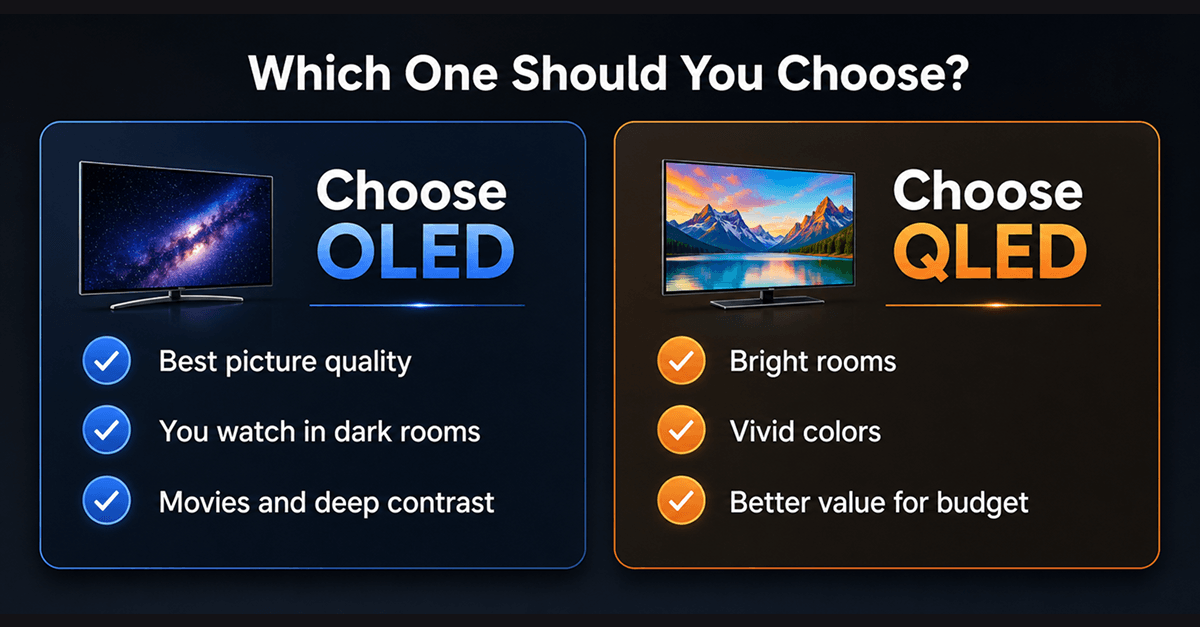
Choose OLED If:
- You prioritize picture quality
- You frequently watch movies
- You often view content in dark rooms
- You want the best possible contrast
Choose QLED If:
- You watch TV in bright rooms
- Budget is an important consideration
- You want strong brightness performance
- You prefer a wider range of pricing options
Final Thoughts
OLED and QLED televisions both offer excellent viewing experiences, but they serve slightly different audiences.
OLED remains the benchmark for contrast, black levels, and cinematic picture quality. For movie enthusiasts and viewers who prioritize image accuracy, it is often the preferred option.
QLED, however, provides outstanding brightness, vibrant colors, and strong value across multiple price ranges. For many households, it represents a practical and versatile choice.
The best option ultimately depends on your viewing environment, budget, and personal preferences rather than the technology name alone.