
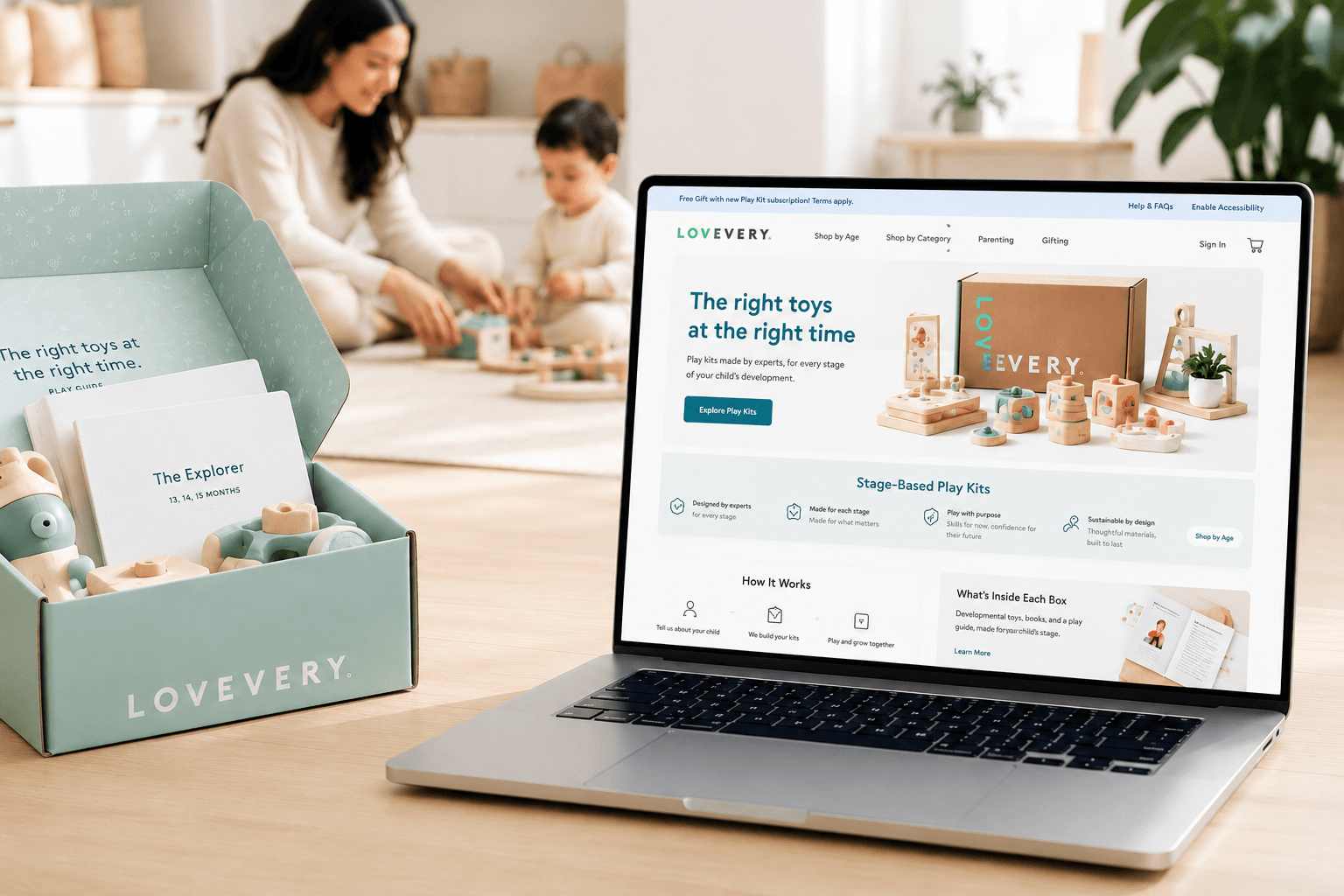
If you’ve spent any time researching baby toys, toddler learning tools, or Montessori-inspired play at home, there’s a good chance you’ve come across Lovevery. The brand has become one of the most recognizable names in early childhood development, especially for parents who want age-based toys that feel thoughtful, beautiful, and easier to use than a random pile of baby products.
Lovevery is best known for its stage-based Play Kits, which are designed around a child’s developmental window. Instead of buying individual toys and guessing what your baby or toddler should be playing with next, Lovevery sends curated kits with playthings, books, and parent guidance based on age. The brand describes its products as Montessori-inspired and focused on supporting a child’s developing brain through purposeful play.
But Lovevery is not cheap, and that is where most parents pause. Are the toys really worth the price? Do babies and toddlers actually use them? Is the subscription helpful, or can you recreate the same experience with less expensive toys?
This Lovevery review breaks down how the brand works, what comes in the Play Kits, how much Lovevery costs in 2026, the biggest pros and cons, and whether it is actually worth it for parents.
What Is Lovevery?
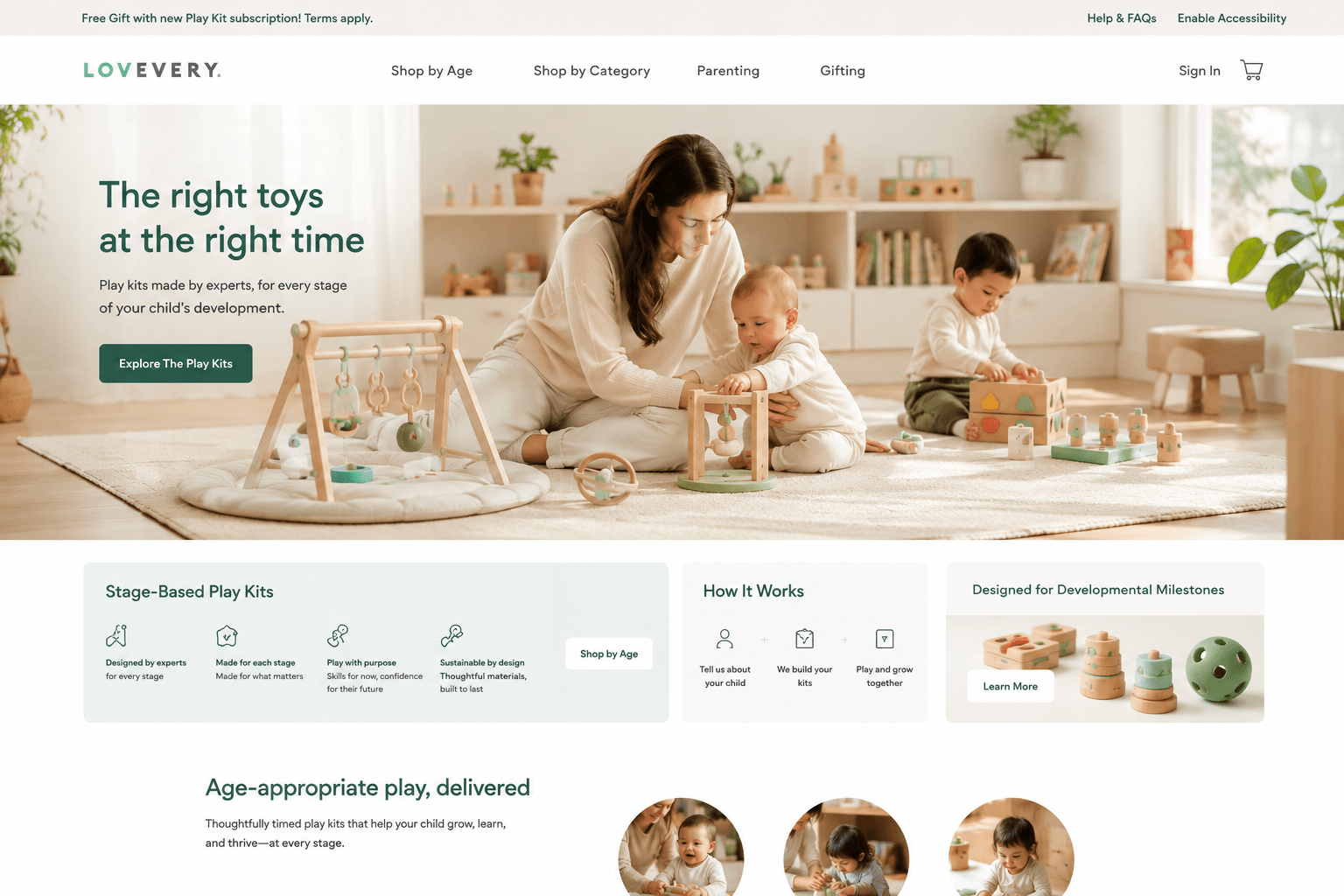
Lovevery is a children’s toy and learning brand focused on stage-based developmental play for babies, toddlers, and preschoolers. Its core product is The Play Kits, a subscription-style system that sends age-appropriate toys and learning materials to your home every few months. The brand also sells standalone products such as The Play Gym, The Block Set, book bundles, skill sets, bath toys, music toys, and other early learning products.
The main idea behind Lovevery is simple: children develop quickly, especially in the first few years, and the toys they need at 4 months are very different from the toys they need at 18 months or 3 years old. Lovevery tries to remove the guesswork by matching toys to specific developmental stages.
The brand’s aesthetic is also a major part of its appeal. Lovevery toys typically use wood, soft colors, clean design, and minimal plastic compared with many mainstream baby toys. For parents who prefer a calmer, more Montessori-inspired playroom, Lovevery has a polished look that feels intentional rather than cluttered.
How Lovevery Works
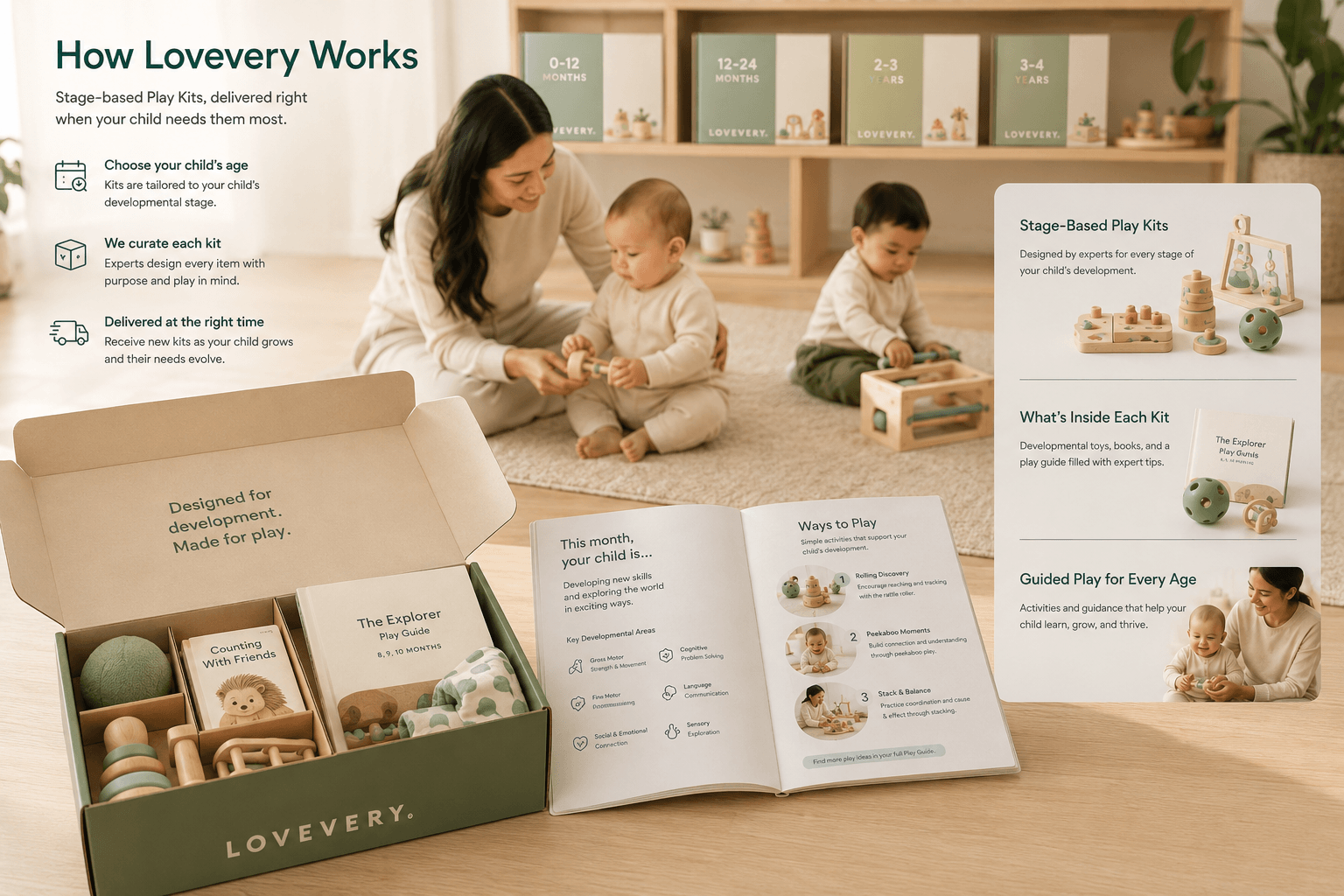
Lovevery’s Play Kits are organized by age. For babies under 12 months, kits are delivered more frequently because development changes quickly during the first year. For toddlers and preschoolers, kits are typically delivered every three months. Lovevery’s official site lists Play Kits by age groups from 0–12 months through 4 years old.
Each Play Kit usually includes a mix of:
- Developmental toys
- Board books or story-based materials
- A Play Guide for parents
- Activity ideas
- Tips for using the toys as the child grows
- Simple explanations of what skills each toy supports
The Play Guide is one of the biggest differences between Lovevery and buying random toys separately. Instead of just receiving toys, parents get guidance on how to introduce them, how to play with them, and what developmental skills they are designed to support. Lovevery says its kits include playthings and books, a Play Guide, week-by-week developmental tips, and activity ideas.
Lovevery Pricing in 2026
Lovevery pricing depends on the child’s age and the type of kit. According to Lovevery’s own product and gifting pages, Play Kits for children from 0–12 months are currently listed at $80 per kit, while Play Kits for children from 1–4 years old are listed at $120 per kit. Baby kits are delivered every two months, while toddler and preschool kits are generally delivered every three months.
Lovevery also notes that parents can save by prepaying for Play Kits. On some age-specific Play Kit pages, Lovevery states that prepaying can save 5%, bringing the cost down to about $38 per month.
That pricing puts Lovevery in the premium category. It is not positioned as a budget toy subscription. Instead, the value comes from curation, quality, developmental guidance, convenience, and the fact that the toys are designed to match a child’s current stage.
What Products Does Lovevery Sell?
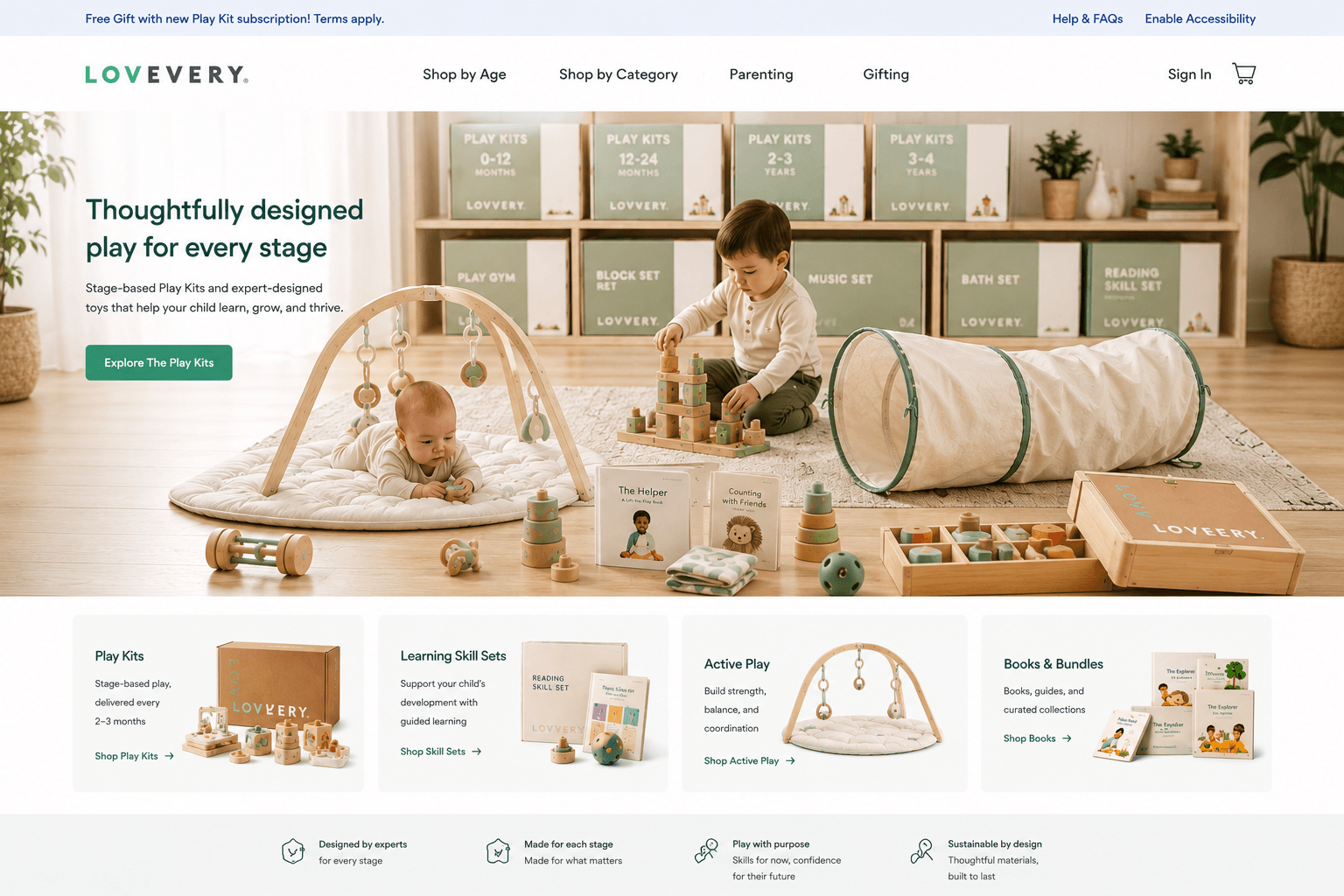
Lovevery’s product lineup goes beyond the Play Kits. The official site lists several product categories, including The Play Kits, Mini Kits, Early Reader Club, Math Skill Set, Reading Skill Set, Course Packs, The Play Gym, The Bath Set, The Music Set, The Block Set, Book Bundles, and Pre-Loved options.
Some of the most popular Lovevery products include:
- LOVEVERY The Play Gym — a stage-based baby activity gym designed for tummy time, sensory play, and early development.
- LOVEVERY The Block Set — a wooden block set with shapes, colors, and activity ideas for toddlers and young children.
- Lovevery The Babbler Play Kit — a toddler Play Kit designed around months 13, 14, and 15.
- LOVEVERY Organic Cotton Play Tunnel — a soft play tunnel for movement, crawling, and imaginative play.
The Play Kits are still the heart of the brand, but the standalone products are helpful for parents who want to try Lovevery without committing to a full subscription.
What Makes Lovevery Different?
The biggest difference is that Lovevery is not just selling toys. It is selling a system.
Most parents know the feeling of buying a toy that looks great online, only for their child to ignore it after five minutes. Lovevery tries to solve that by designing each kit around a specific developmental stage. The toys are meant to arrive when the child is most likely to be ready for them.
For example, Lovevery’s Adventurer Play Kit is designed for months 16, 17, and 18. The kit includes items focused on skills like two-handed coordination, finger strength, problem solving, empathy, movement, and early emotional awareness. Lovevery lists items such as a race ramp, pull puzzle, threadable bead kit, wooden stacking pegboard, board book, and Play Guide inside that kit.
This is where Lovevery works best: it gives parents a clear structure. You do not have to search for “best toys for 16-month-old” or wonder whether your toddler needs puzzles, stacking toys, pretend play, or fine motor activities. The kit arrives with a built-in plan.
Lovevery Pros
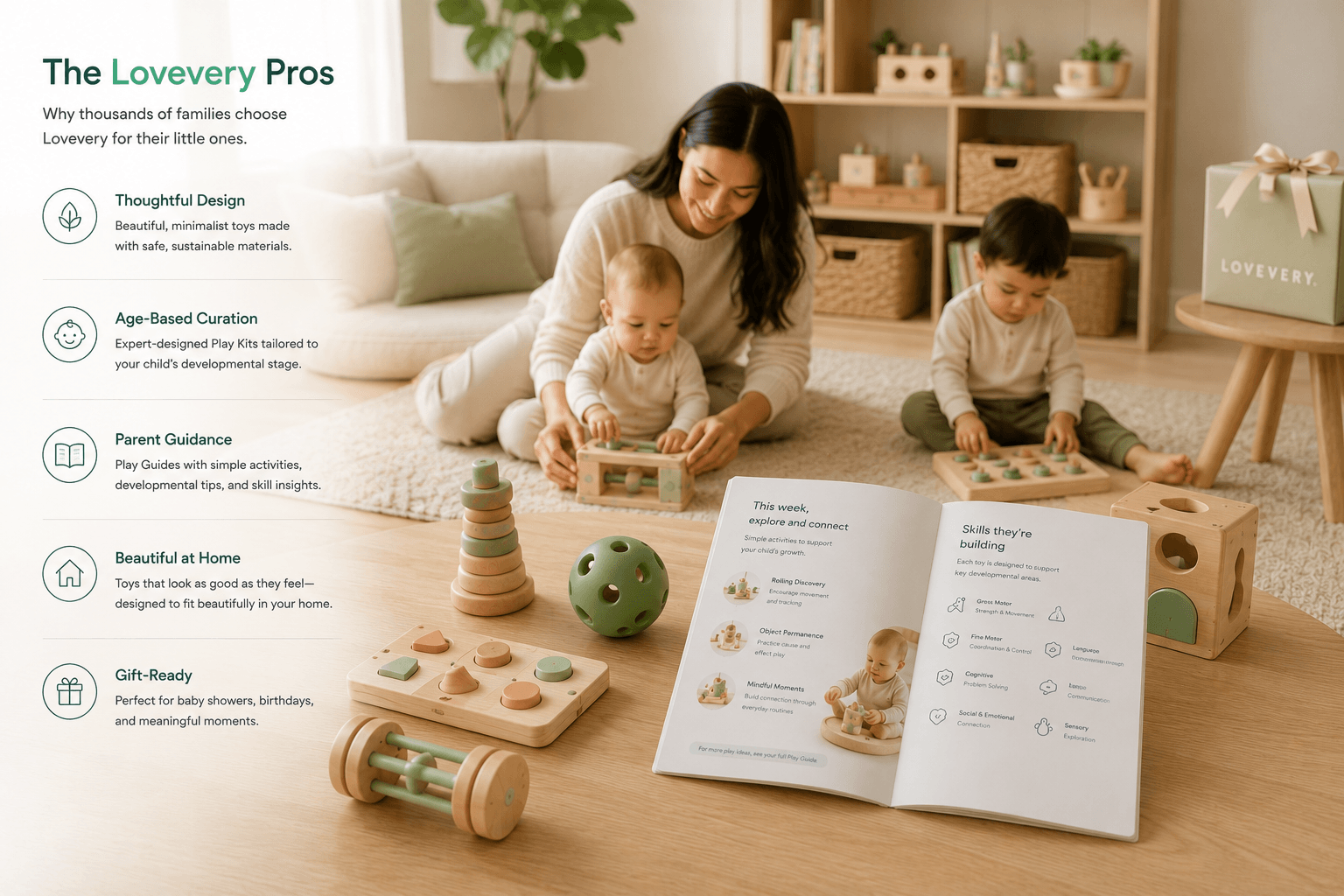
1. The Toys Feel Thoughtfully Designed
Lovevery toys are usually simple, attractive, and purposeful. They do not rely on flashing lights, loud sounds, or overstimulation. Instead, many of the toys focus on hands-on problem solving, fine motor skills, cause and effect, movement, language, and practical life skills.
This makes Lovevery especially appealing for parents who want a calmer play environment or prefer Montessori-inspired toys.
2. The Age-Based Curation Is Convenient
One of Lovevery’s biggest advantages is convenience. Parents do not have to spend hours researching developmental toys for each stage. The Play Kits are already organized by age, and the included guide helps explain how to use each item.
For busy parents, first-time parents, or gift-givers who want something that feels useful and premium, this can be a major selling point.
3. The Play Guide Adds Real Value
The Play Guide is not just a small instruction sheet. It helps parents understand what each toy is for and how to use it in different ways. Lovevery also says its Play Kits include week-by-week developmental tips and activity ideas, which can be especially helpful during the baby and toddler years.
This is one reason some parents feel Lovevery is worth more than buying individual toys. You are paying for the guidance as much as the physical products.
4. The Products Look Beautiful at Home
Lovevery has a very clean, modern look. The toys are often made with natural materials and soft colors, which makes them easier to keep out in a living room or nursery without making the space feel chaotic.
This may not matter to every parent, but it is a real part of the brand’s appeal.
5. It Can Be a Great Gift
Lovevery works well as a baby shower gift, first birthday gift, or grandparent gift because it feels premium and practical. The brand also offers Play Kit gifting options based on the child’s age, with the gift recipient’s shipping and tax calculated when they activate the gift.
Lovevery Cons
1. It Is Expensive
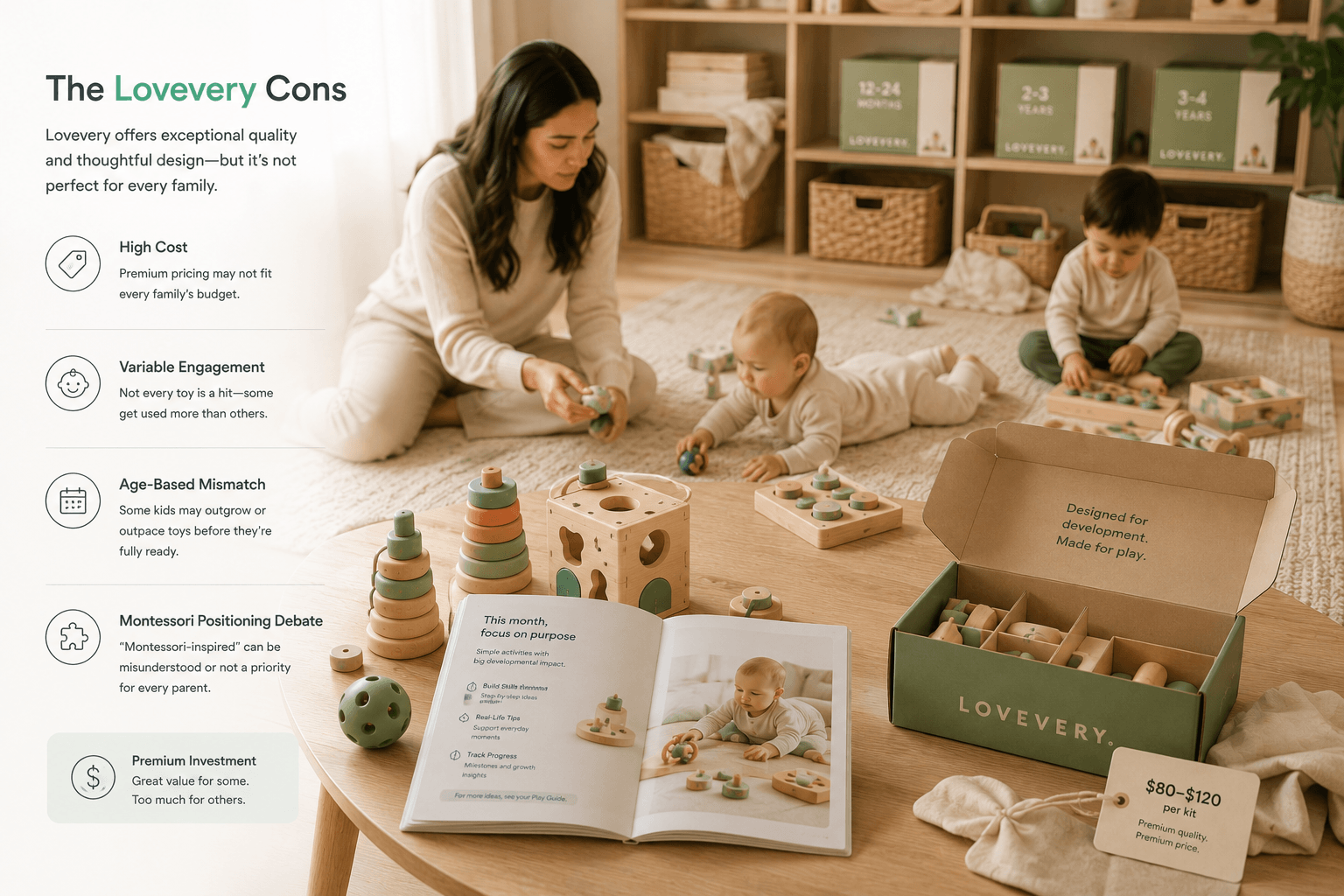
The biggest downside is the price. At $80 per kit for babies and $120 per kit for toddlers and preschoolers, Lovevery is a premium purchase.
Some parents will feel the quality and guidance justify the cost. Others may feel they can recreate a similar toy rotation with secondhand toys, library books, and less expensive Montessori-style products.
2. Not Every Toy Will Be a Hit
Like any toy subscription, some items will be used constantly, while others may barely get touched. Children have different interests, temperaments, and developmental timelines. A toy that is perfect for one child may not interest another.
This is a common theme in parent discussions. Some Reddit users praise the quality and usefulness, while others say certain kits or toys were not worth the money for their child.
3. Some Kids May Outgrow the Timing Quickly
Because Lovevery is organized by age, the timing may not be perfect for every child. Some children may be ahead in certain motor or cognitive skills, while others may need more time before they are ready for a specific toy.
In one parent discussion, a user said their baby often preferred toys from later kits and suggested they might choose the next age kit if starting over.
4. The Montessori Label May Not Matter to Everyone
Lovevery describes its toys as Montessori-inspired, but some parents are skeptical of paying a premium for that positioning. In Reddit discussions, some users question whether the “Montessori” branding justifies the higher price, especially for very young babies.
If you are mainly looking for affordable toys, Lovevery may feel overpriced. If you value curation, design, guidance, and convenience, the price may feel more reasonable.
Who Is Lovevery Best For?
Lovevery is best for parents who want a premium, organized, and low-stress way to support developmental play at home. It is especially good for:
- First-time parents who want guidance
- Parents who like Montessori-inspired toys
- Families who prefer fewer, better toys
- Parents who want a cleaner-looking playroom
- Gift-givers who want a premium baby or toddler gift
- Busy parents who do not want to research every toy stage
- Families who value quality and curation over bargain pricing
Lovevery is also a strong option if you want toys that feel educational without looking overly loud, plastic-heavy, or cluttered.
Who Should Skip Lovevery?
Lovevery may not be the best fit if you are on a tight budget or if your child already has plenty of toys. It may also not be ideal if you prefer highly open-ended toys that can be used in dozens of different ways, since some Lovevery items are designed for more specific developmental tasks.
You may want to skip Lovevery if:
- You want the cheapest toy option
- You enjoy building your own toy rotation
- You already buy secondhand Montessori-style toys
- Your child loses interest in structured toys quickly
- You do not care about the parent guide
- You prefer fewer subscriptions
- You want mostly open-ended pretend play toys
For budget-conscious families, buying a few standout Lovevery items secondhand or choosing one standalone product may be a better starting point than subscribing to every kit.
Is Lovevery Worth It in 2026?
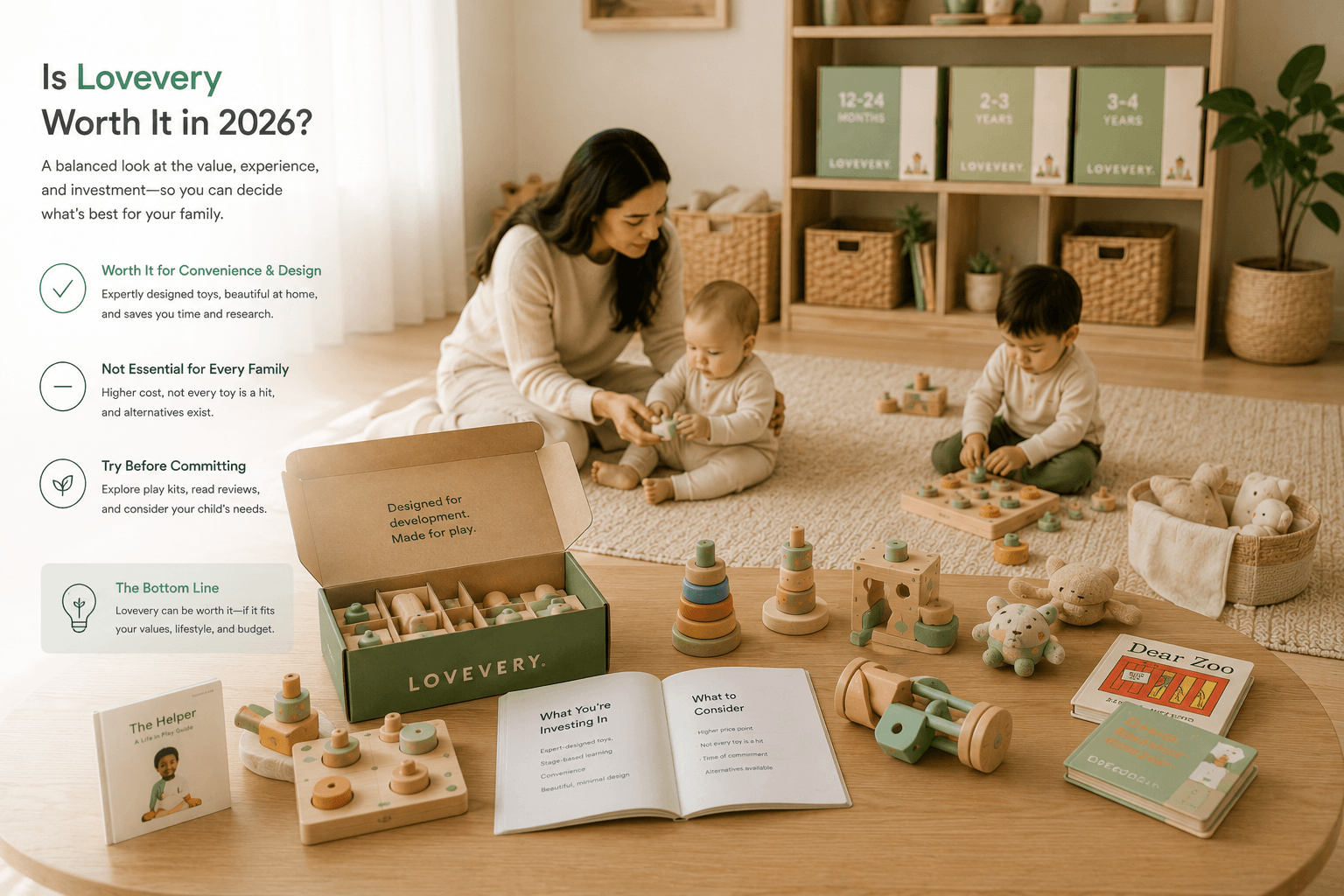
Lovevery is worth it in 2026 if you value convenience, thoughtful design, developmental guidance, and premium toy quality. The Play Kits are especially appealing for first-time parents, gift-givers, and families who want a more organized approach to baby and toddler play.
However, Lovevery is not a must-have. The price is high, and not every toy will be equally useful for every child. Some parents love the kits, while others feel they can recreate a similar experience for less. Parent discussions show both sides: many appreciate the quality and structure, while others question whether the cost is justified.
The best approach may be to start with one product or one kit instead of committing long-term right away. The Play Gym, Block Set, or one age-specific Play Kit can give you a good sense of whether the brand fits your child and your parenting style.
Final Verdict: Should You Buy Lovevery?
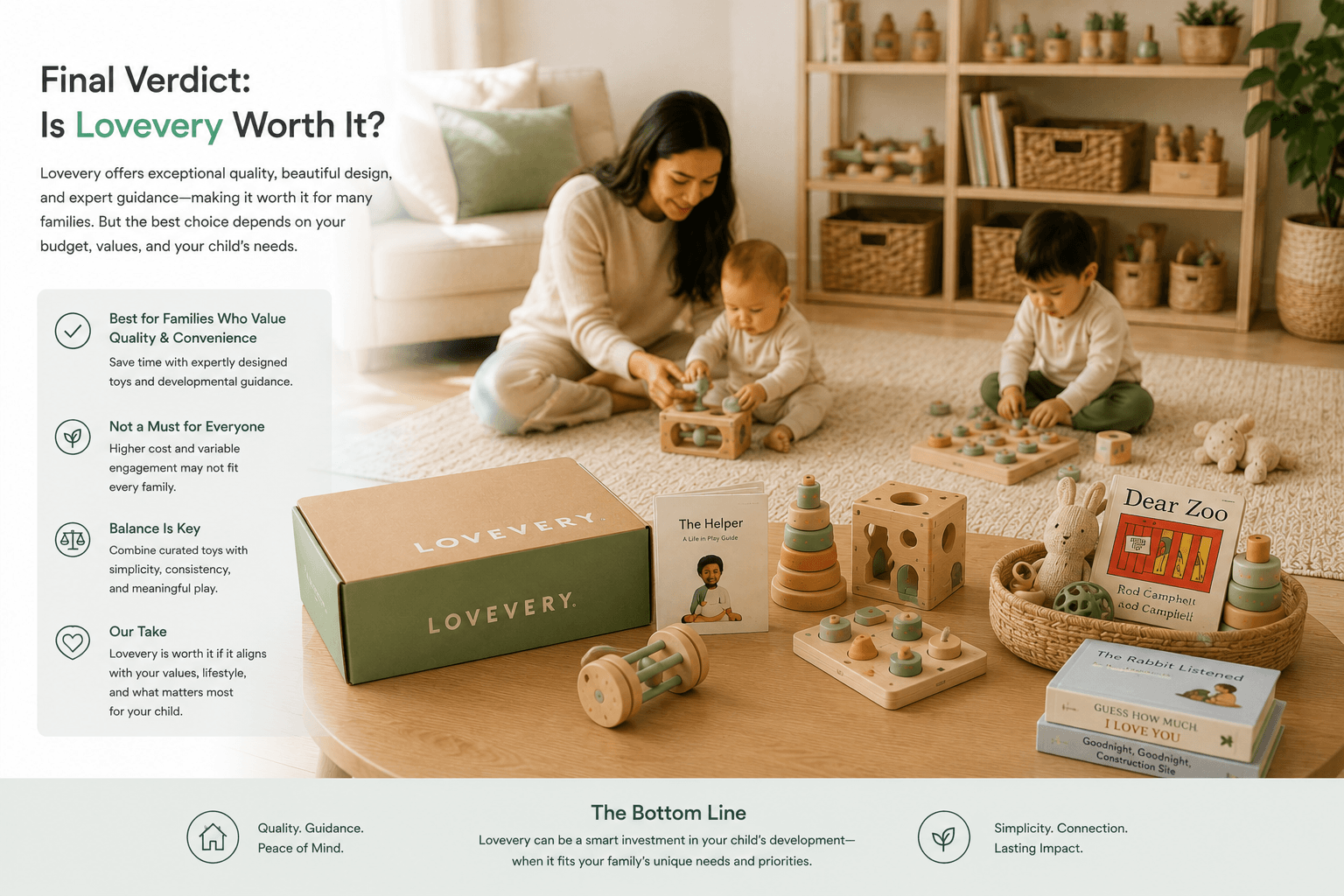
Lovevery is a premium early learning brand that does a very good job of making developmental play feel simple, beautiful, and approachable. The toys are well-designed, the kits are thoughtfully organized, and the parent guidance adds real value for families who want help knowing what to do at each stage.
The main drawback is price. Lovevery is not the cheapest way to support your child’s development, and it is not necessary for raising a curious, capable baby or toddler. But if you want a polished, age-based toy system that saves time and reduces guesswork, Lovevery can be a strong investment.
For most families, Lovevery is best viewed as a convenience-and-quality purchase rather than an essential. If the price fits your budget, it can be worth it. If not, you can still borrow the same principles: fewer toys, more intentional play, more books, more rotation, and more time interacting with your child.
Lovevery is best for parents who want premium, Montessori-inspired toys with clear developmental guidance. It is less ideal for families who want the lowest-cost option or prefer to build their own toy collection from scratch.