
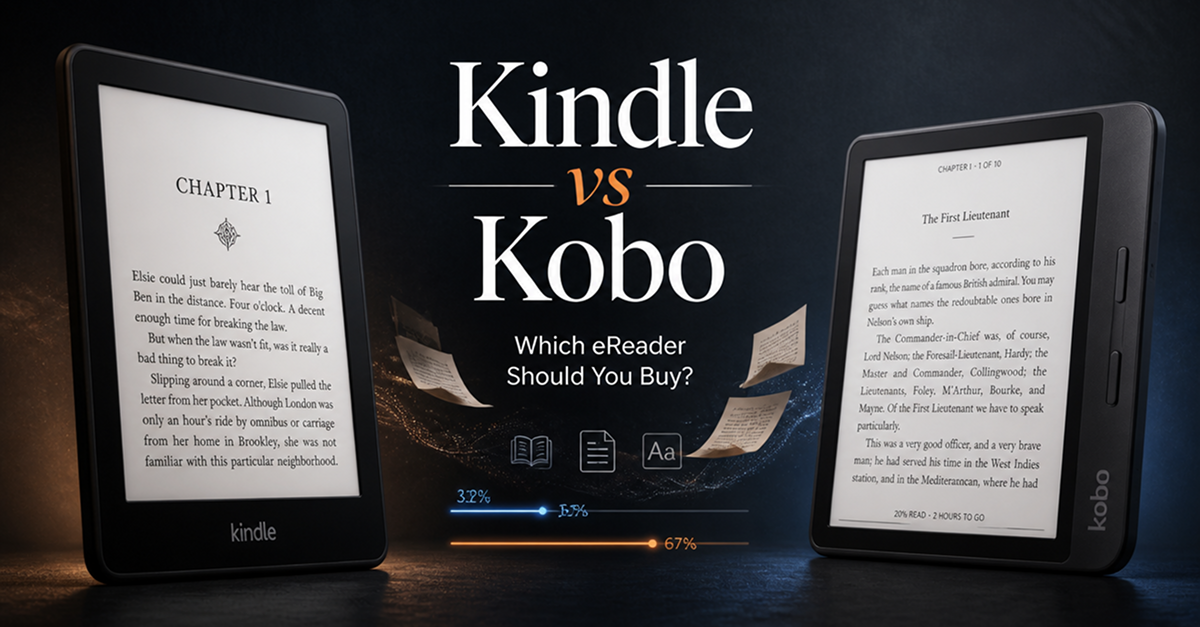
For readers who prefer digital books, Kindle and Kobo are two of the most popular eReader platforms available today. Both offer dedicated reading devices, access to large ebook libraries, and features designed to create a comfortable reading experience. However, the two ecosystems differ in important ways that may influence your buying decision.
Whether you’re a casual reader, an avid book enthusiast, or someone transitioning from physical books, understanding the differences between Kindle and Kobo can help you choose the right device and ecosystem.
KINDLE: https://www.amazon.com/All-new-Amazon-Kindle-Paperwhite-glare-free/dp/B0DDZJS3SB/ref=sr_1_4
KOBO: https://www.amazon.com/Kobo-SleepCover-Glare-Free-Touchscreen-ComfortLight/dp/B0H1YFPCMJ/ref=sr_1_1
Quick Comparison
| Feature | Kindle | Kobo |
| Ebook Store | Excellent | Excellent |
| Library Integration | Limited | Strong |
| File Format Flexibility | Moderate | Excellent |
| Device Selection | Wide Range | Good Range |
| Ecosystem Integration | Excellent | Good |
| Customization | Good | Excellent |
| Audiobook Support | Strong | Good |
Device Selection
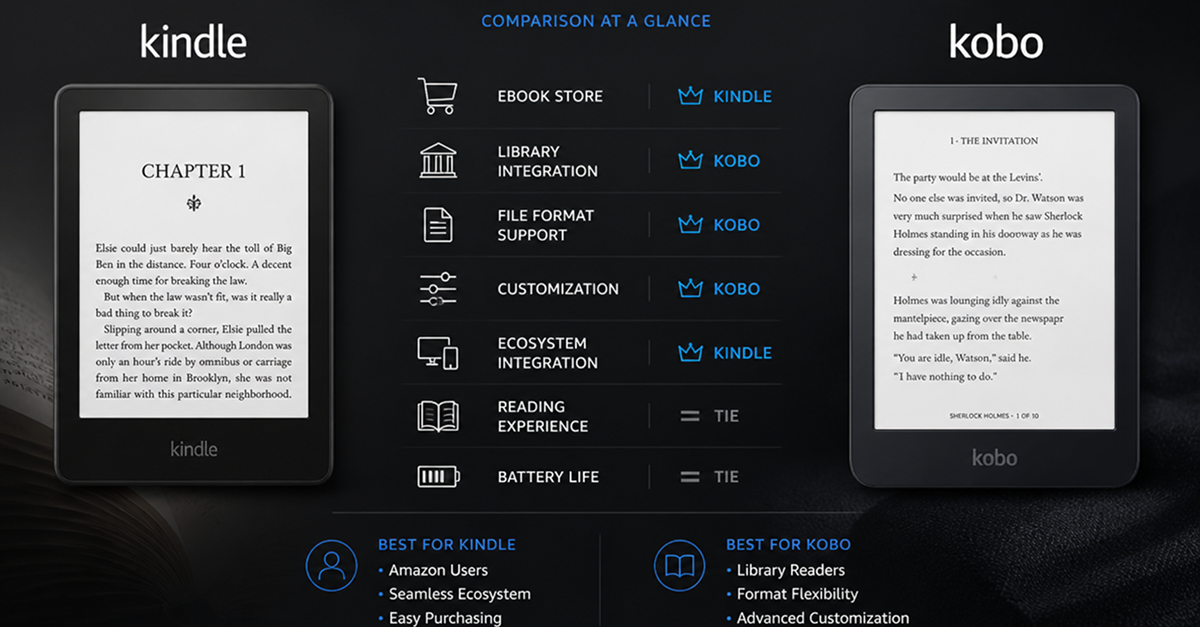
Amazon offers several Kindle models ranging from entry-level devices to premium options such as the Kindle Paperwhite and Kindle Scribe.
Kobo also offers multiple devices, including compact readers and larger premium models designed for extensive reading and note-taking.
For most users, both brands provide enough variety to accommodate different budgets and reading preferences.
Winner: Tie
Ebook Store and Content Availability
One of Kindle’s biggest strengths is Amazon’s extensive ebook marketplace.
Readers can access:
- Bestsellers
- New releases
- Independent publications
- Subscription services
Kobo also maintains a substantial ebook store with a broad catalog of titles across many genres.
While both stores are impressive, Amazon’s marketplace remains larger and more deeply integrated into its ecosystem.
Winner: Kindle
Reading Experience
Both Kindle and Kobo devices focus heavily on readability.
Common features include:
- E Ink displays
- Adjustable brightness
- Long battery life
- Lightweight designs
The reading experience on both platforms is excellent, and many users would struggle to identify a clear winner based solely on screen quality and comfort.
Winner: Tie
File Format Support
This category highlights one of Kobo’s strongest advantages.
Kobo devices generally support a wider range of ebook formats without requiring additional conversion tools.
This flexibility appeals to readers who obtain ebooks from multiple sources rather than relying exclusively on a single storefront.
Kindle devices support popular formats but remain more closely tied to Amazon’s ecosystem.
Winner: Kobo
Library Borrowing
Many public libraries offer digital lending services that allow readers to borrow ebooks.
Kobo’s integration with library systems is often viewed as one of its most attractive features. Readers who frequently borrow books may find Kobo’s approach particularly convenient.
While Kindle supports library borrowing in some regions, Kobo often provides a more streamlined experience for dedicated library users.
Winner: Kobo
Customization Options
Kobo devices generally offer more customization settings for readers who like to fine-tune their reading experience.
Users can often adjust:
- Fonts
- Margins
- Layout settings
- Reading preferences
Kindle provides customization as well, but Kobo tends to offer greater flexibility for advanced users.
Winner: Kobo
Ecosystem and Convenience
Amazon’s ecosystem is one of Kindle’s biggest advantages.
Features such as:
- Cloud synchronization
- Account integration
- Book purchasing
- Cross-device reading
work together seamlessly.
For users already invested in Amazon’s services, Kindle offers a highly convenient experience.
Winner: Kindle
Battery Life
Battery performance is excellent on both platforms.
Most users can read for days or even weeks between charges depending on usage habits and device settings.
Battery life is unlikely to be a deciding factor for most buyers.
Winner: Tie
Who Should Buy a Kindle?
Kindle is an excellent choice for:
- Frequent Amazon customers
- Users seeking a simple experience
- Readers who buy most books online
- Users who value ecosystem convenience
Who Should Buy Kobo?
Kobo is a strong choice for:
- Library users
- Readers who value format flexibility
- Users seeking more customization
- Buyers who prefer a platform independent of Amazon
Final Verdict
Both Kindle and Kobo deliver excellent digital reading experiences, but they appeal to slightly different audiences.
Kindle remains the stronger choice for users who want seamless integration with Amazon’s ecosystem and access to one of the world’s largest ebook marketplaces.
Kobo stands out for its flexibility, library integration, and customization options, making it particularly attractive to avid readers who want greater control over their reading experience.
For most buyers, the decision comes down to whether ecosystem convenience or reading flexibility is the higher priority.