
There are certain things you expect kids to get excited about.
A new LEGO set.
A birthday present.
Maybe a trip to the toy store.
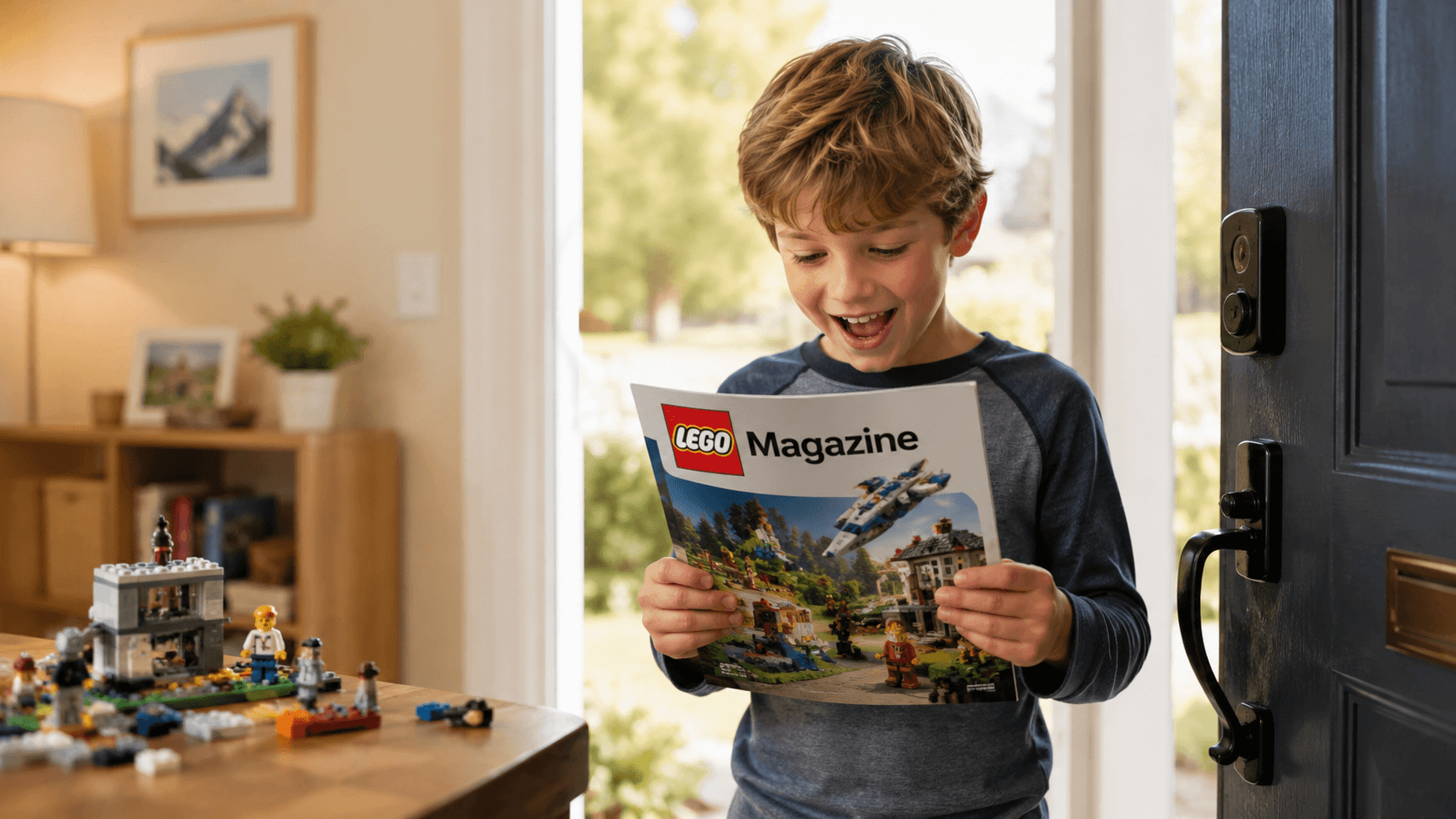
A magazine arriving in the mailbox?
That wasn’t on our list.
Yet somehow, that’s exactly what happened.
We originally discovered LEGO Magazine while looking for building ideas online. We assumed it was simply another promotional catalog packed with product photos and advertisements.
Instead, what arrived felt surprisingly different.
And after several issues, we finally understood why so many families keep signing up.
The First Surprise? It Didn’t Feel Like Marketing
When the magazine arrived, we expected pages filled with products.
There were certainly LEGO sets featured throughout.
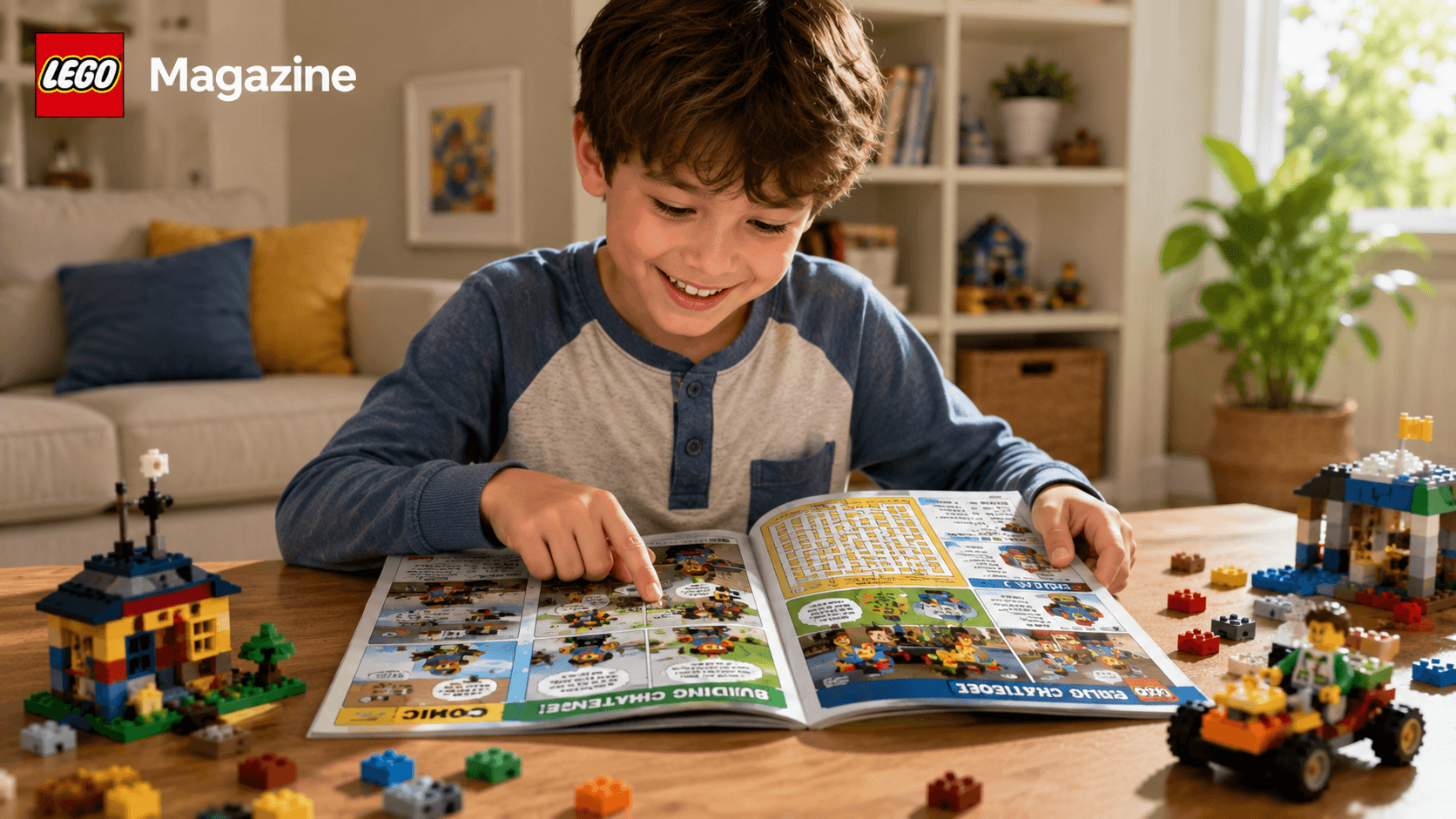
But what immediately stood out was how much of the magazine focused on activities rather than shopping.
Puzzles.
Comics.
Building challenges.
Creative ideas.
Fan creations submitted by kids.
Interactive activities that actually encouraged children to put the magazine down and start building something themselves.
That balance made a much bigger difference than we expected. LEGO Magazine is designed for children between ages 5 and 9 and is delivered free several times per year. Each issue includes activities, comics, posters, building inspiration, and kid-created content.
Instead of feeling like a catalog, it felt more like an activity book that happened to be LEGO-themed.
Suddenly The Mailbox Became Interesting Again
Something unexpected started happening.
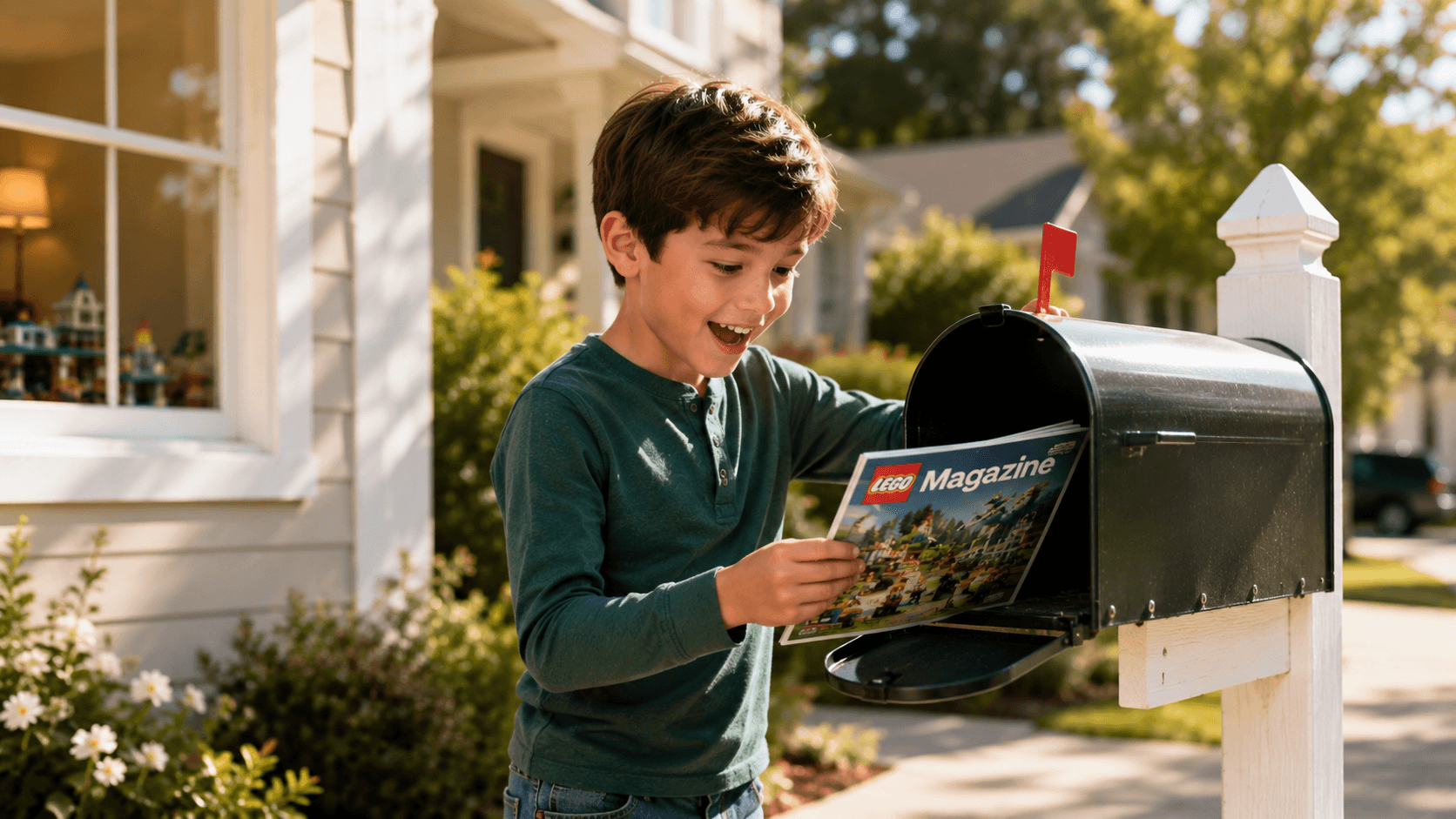
The magazine would arrive.
The excitement would be immediate.
And then the waiting would begin all over again.
The anticipation became part of the experience.
In a world where most entertainment appears instantly on a screen, there was something oddly refreshing about watching a child check the mailbox to see if the next issue had arrived.
Apparently we aren’t the only family that noticed this.
Several parents mention that their children actively look forward to new issues and regularly check for the next delivery.
We didn’t expect a magazine to create that kind of excitement in 2026.
Yet here we are.
The Pages That Kept Getting Revisited
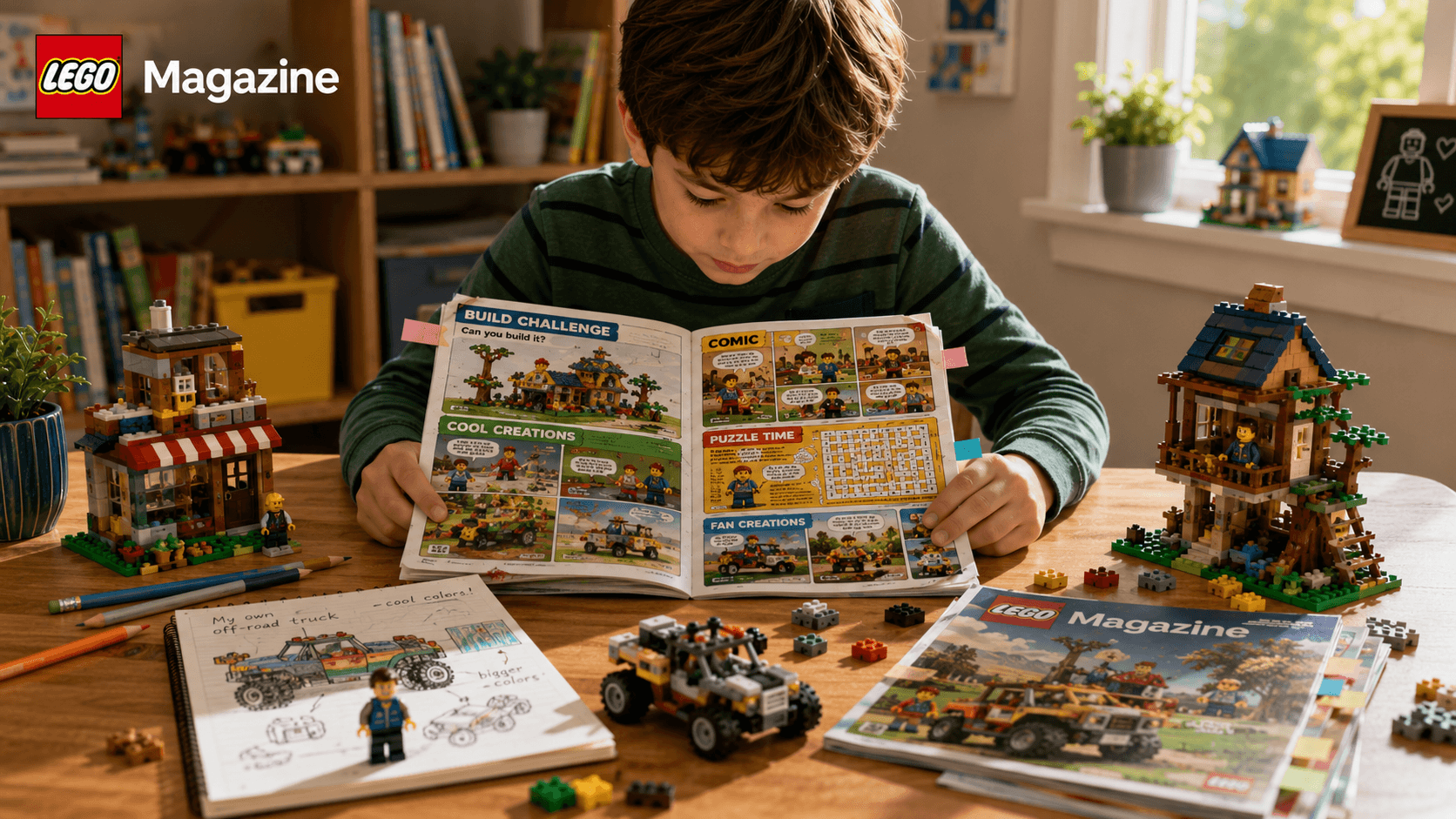
Most magazines get read once.
Then forgotten.
LEGO Magazine seemed to follow a different pattern.
Certain pages kept getting revisited.
The puzzles.
The comics.
The building challenges.
The sections featuring creations submitted by other young LEGO builders around the world.
Those pages turned into repeat destinations rather than one-time content.
What surprised us most was that the magazine didn’t require constant supervision.
Kids could browse, read, solve, imagine, and create on their own.
That independence ended up being one of its biggest strengths.
Where The Real Magic Happens
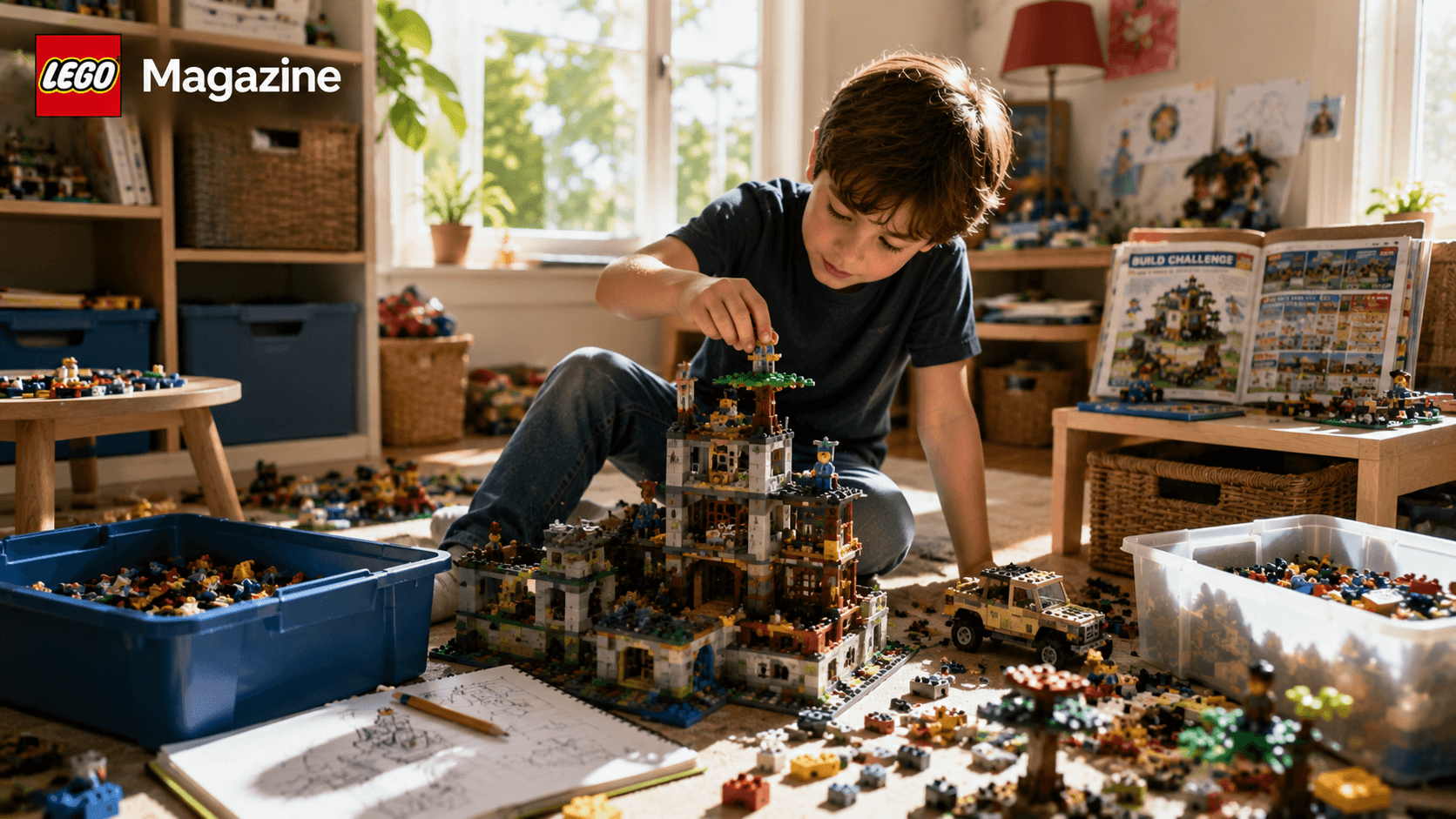
The most valuable moments didn’t happen while reading.
They happened afterward.
The magazine would introduce a challenge.
An idea.
A building concept.
Then suddenly an entire afternoon would be spent digging through LEGO bins trying to recreate something inspired by what was inside.
The publication consistently nudges kids away from passive consumption and back toward hands-on creativity.
For a brand built around imagination, that feels exactly right.
We Didn’t Expect Kids To Care About Other Kids’ Builds
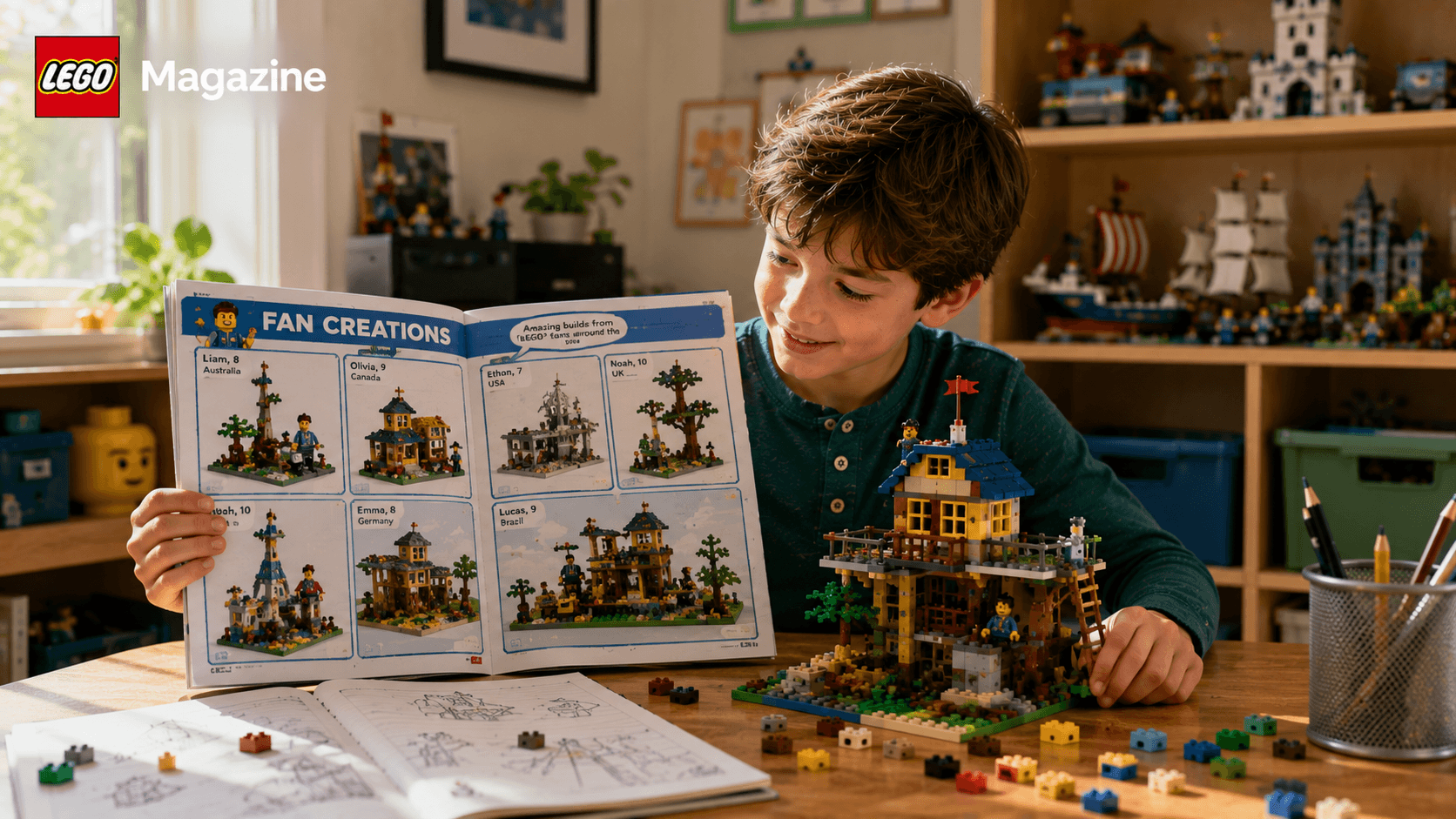
One section consistently grabbed attention.
The fan creations.
Every issue showcases builds submitted by LEGO fans from around the world.
At first glance, it seems like a small feature.
In practice, it changes the experience.
Instead of seeing only professionally designed models, kids see creations built by children their own age.
Suddenly the message shifts.
It stops being:
“Look what LEGO built.”
And becomes:
“Look what someone just like you built.”
That distinction matters.
It makes creativity feel accessible rather than intimidating.
The Screen-Free Benefit We Didn’t Notice Right Away
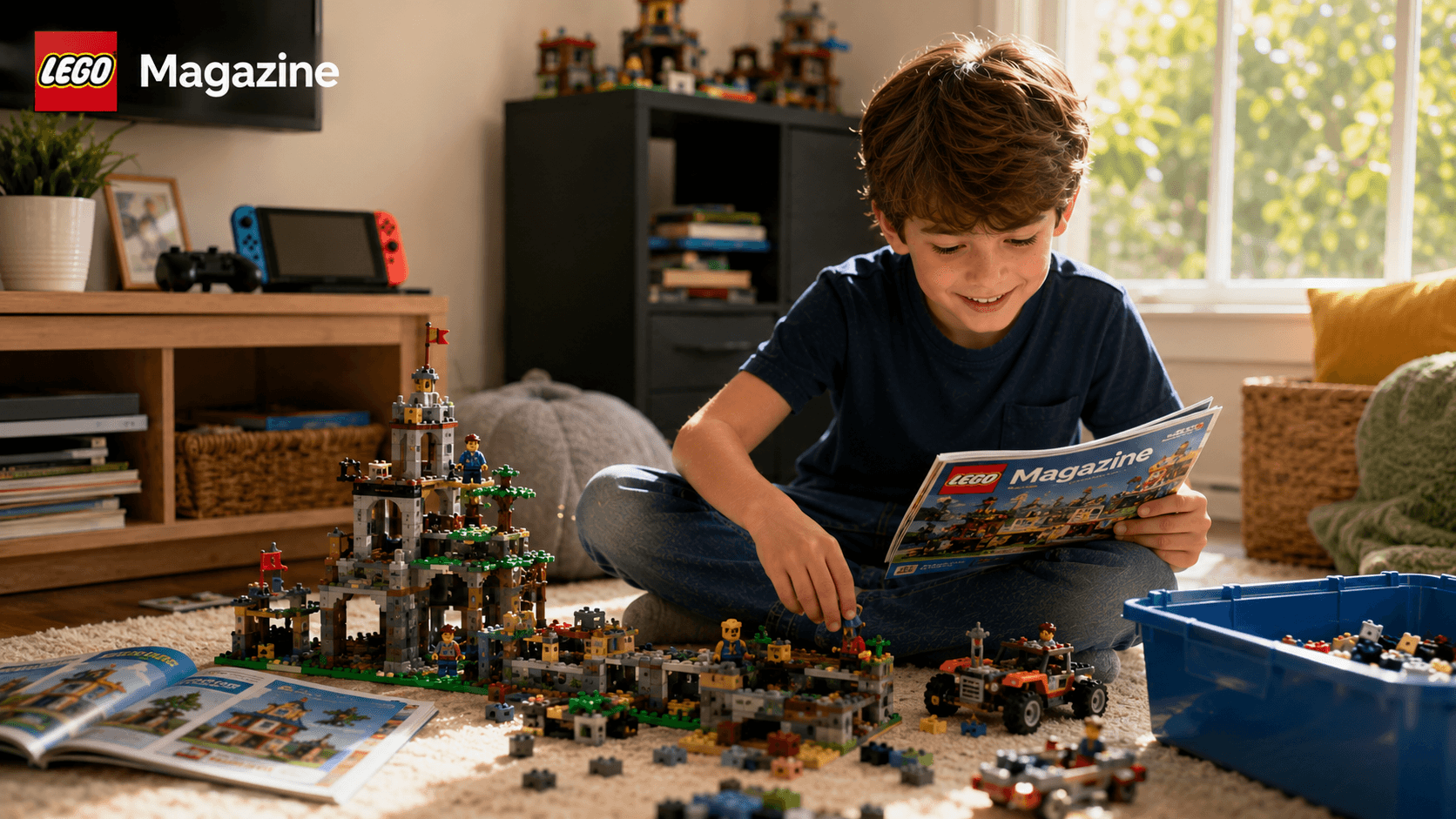
This wasn’t the reason we signed up.
But it may be the reason we stayed.
The magazine naturally creates screen-free entertainment.
No logins.
No charging cables.
No notifications.
No algorithms competing for attention.
Just pages, ideas, and bricks.
Many parents specifically mention that the physical magazine encourages reading habits and independent engagement.
In a digital-first world, that ended up feeling surprisingly valuable.
What We Thought We’d Get vs. What Actually Arrived
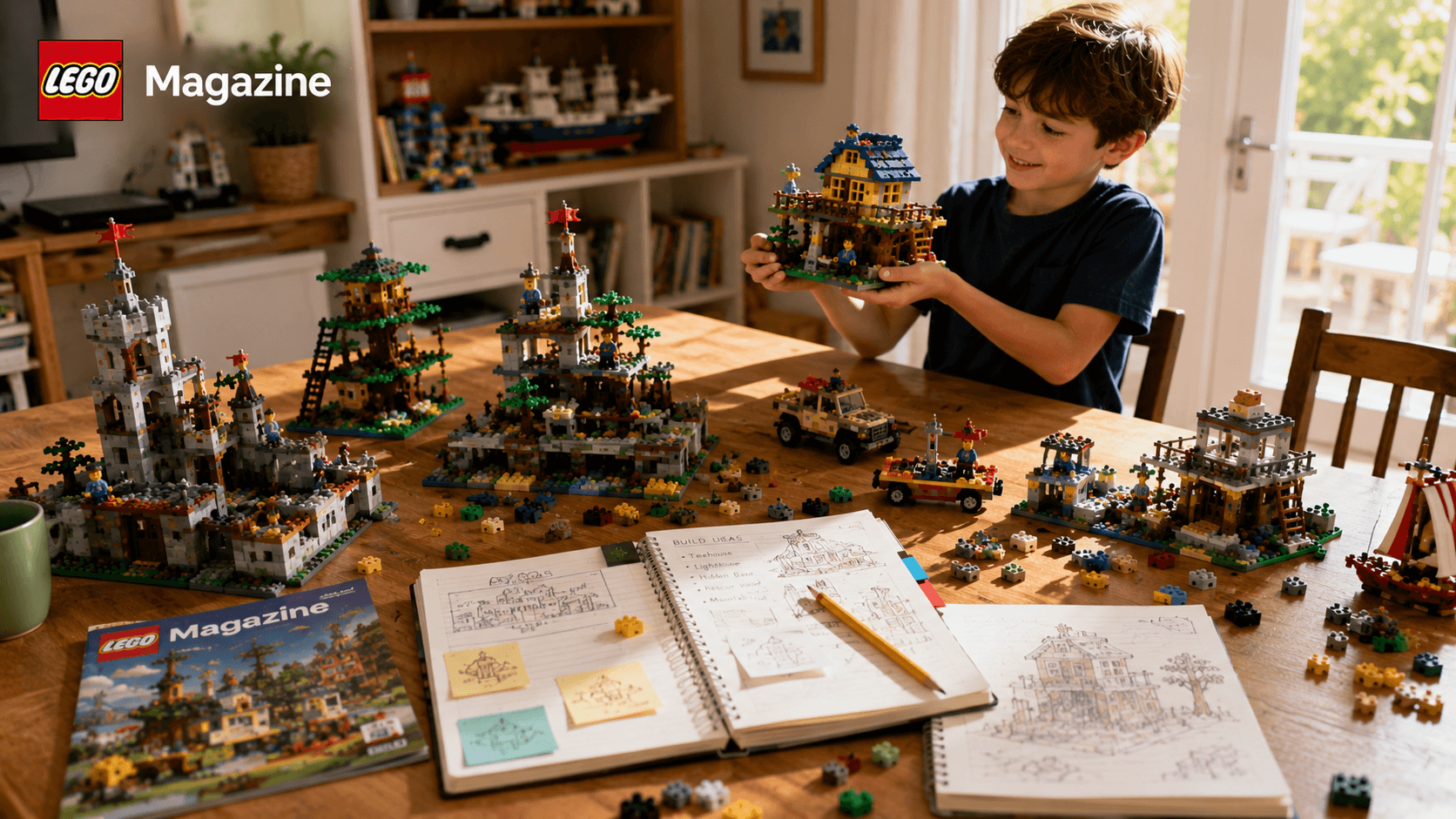
We thought we’d receive:
A small promotional magazine.
Occasional LEGO advertisements.
A few product announcements.
What actually arrived was:
A recurring creative activity.
A source of building inspiration.
A reason to step away from screens.
A publication that somehow stays relevant long after the initial excitement wears off.
That gap between expectation and reality was easily the biggest surprise.
Why It’s Hard To Believe It’s Free
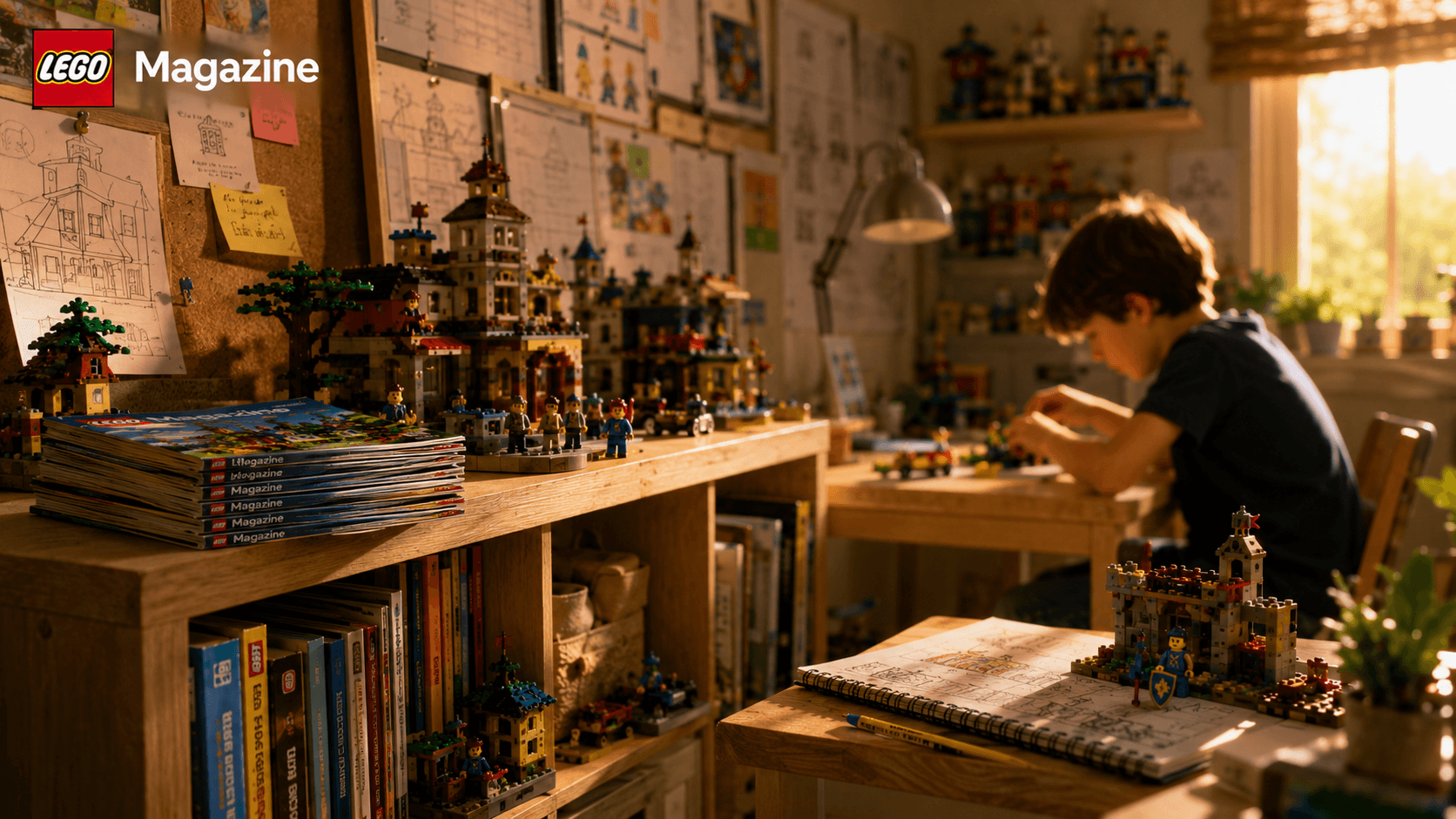
At some point we started asking the obvious question.
Why does LEGO give this away?
The magazine is completely free, including delivery, for eligible subscribers.
After spending time with it, the answer becomes clearer.
The publication isn’t really about selling a single product.
It’s about keeping creativity active between building sessions.
It’s about strengthening the relationship kids already have with LEGO.
And it does that remarkably well.
We Signed Up For A Magazine. We Ended Up Getting A New Tradition.
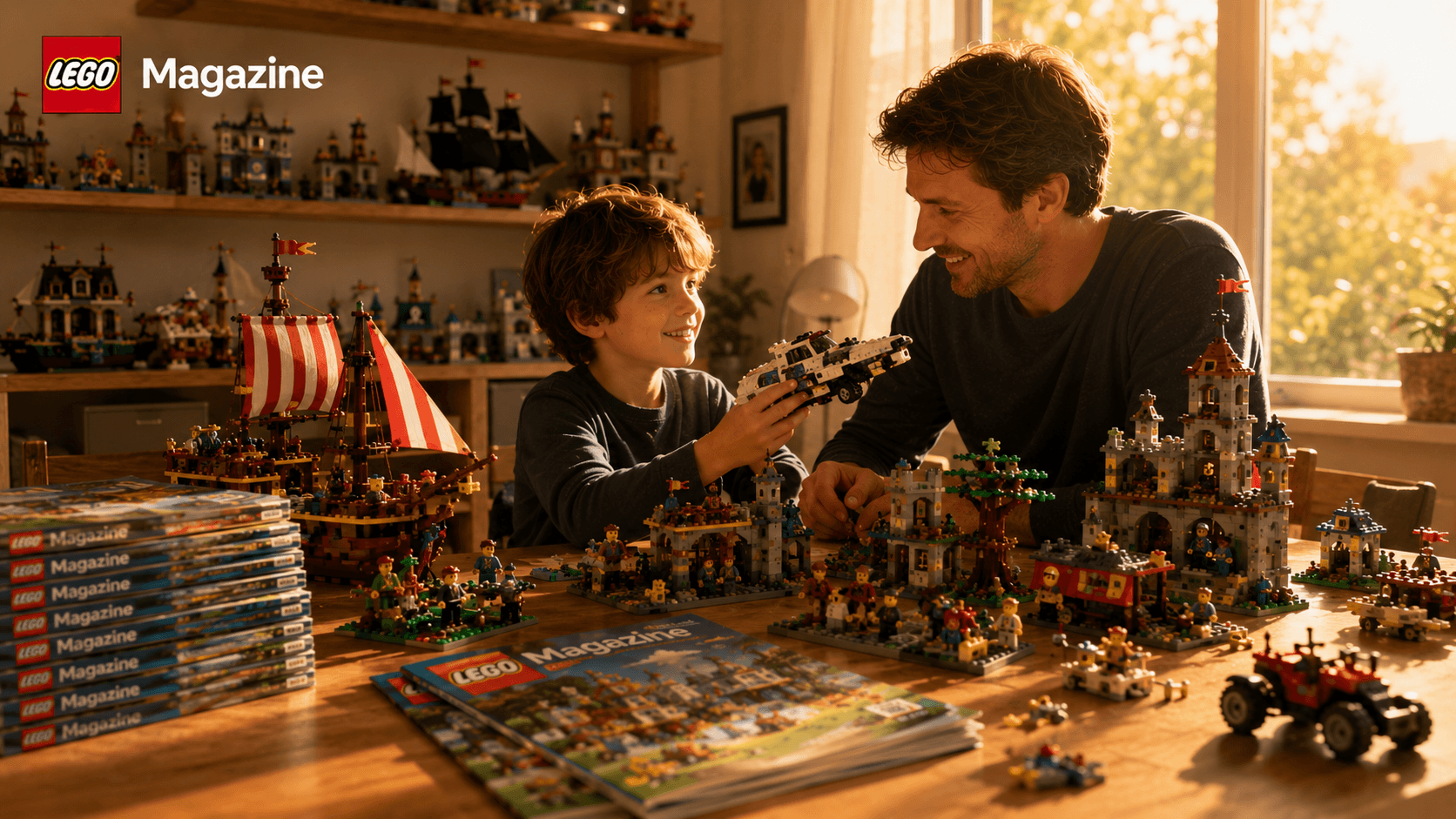
If someone had told us a free magazine would become one of the most anticipated pieces of mail arriving at the house, we probably wouldn’t have believed them.
Yet that’s exactly what happened.
LEGO Magazine succeeded because it delivered something we weren’t expecting.
Not more products.
Not more screen time.
Not another subscription to manage.
Instead, it delivered ideas.
Activities.
Challenges.
And small moments of creativity that continued long after each issue was finished.
We originally signed up because it was free.
We stayed because every new issue gave us one more reason to pull out the LEGO bricks and start building again.